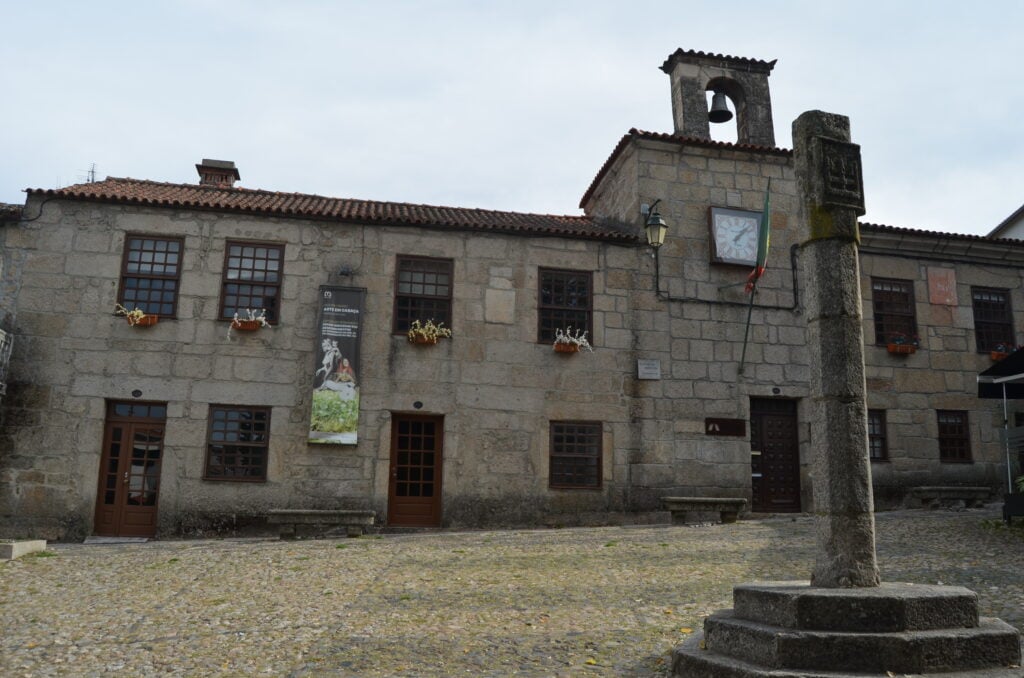
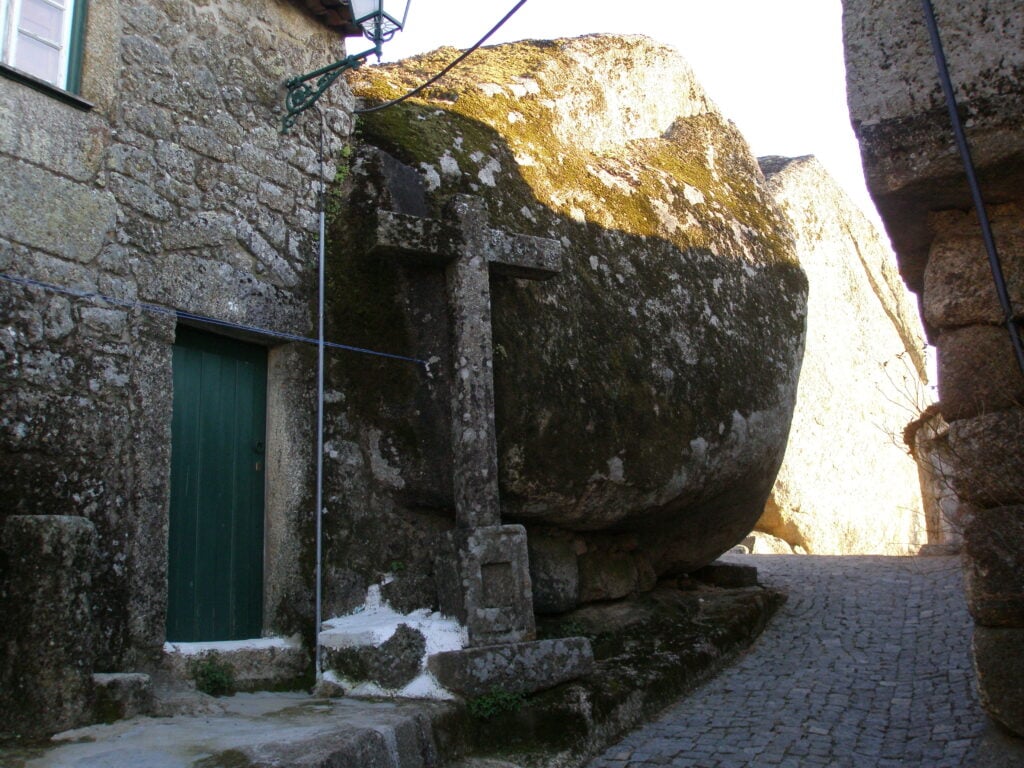
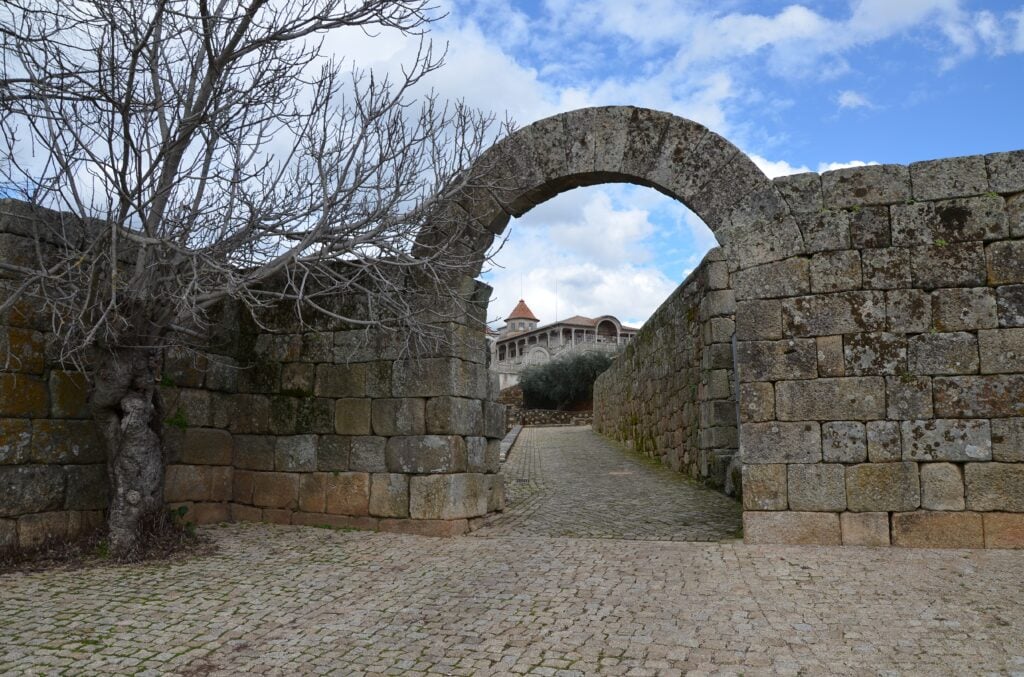
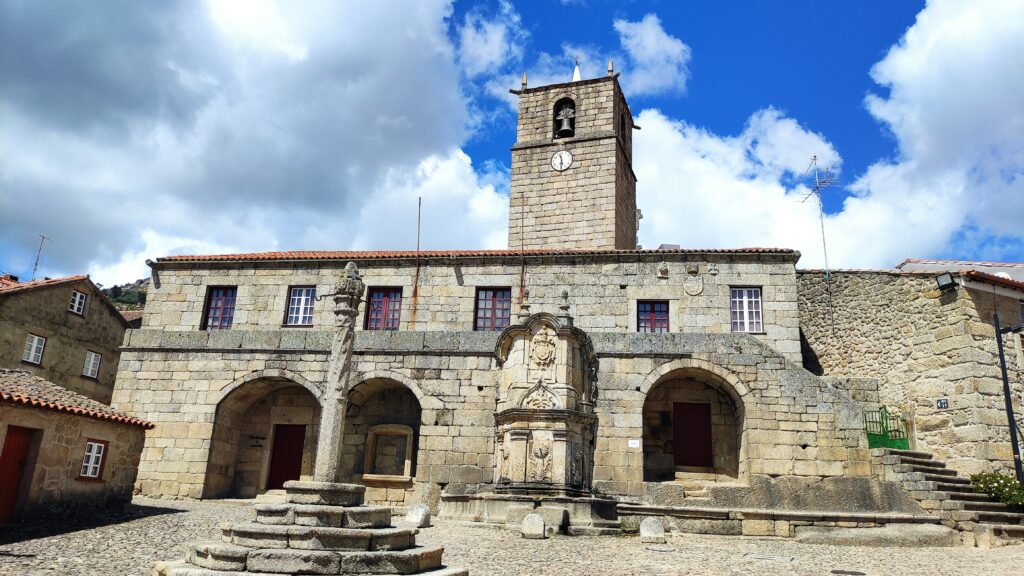
Portugal in general loves its four-legged friends with over half of Portuguese households owning a pet. Many cafés have outdoor dining where pets are welcome. Restaurants offer dog treats or put out a water bowl for their animal guests. Water fountains in public parks sometimes have a spigot at the base to make it easier for owners to give their pets a drink. Dog parks are also available in Portugal’s bigger cities. Pets, like babies and children, are also greeted by the Portuguese with love and affection instead of frustration. In short, your pet will be quite welcome in Portugal.
Photo by chanyq320 (Flickr)
Moving your pet to Portugal is not a simple process, but once you arrive, it’s also important to know where to go to give your furry companions the best care. The Portuguese capital of Lisbon has a wide range of high-quality clinics to ensure that your pet will receive the best veterinary assistance whether you need a check-up, a vaccine, or urgent care.
Prices for vet care in Lisbon are generally comparable to clinics in the USA or other European countries, but you may find that it’s easier to make an appointment in Portugal and some additional services may be thrown in under the same consultation fee.
We have provided our top five choices for vet care in Lisbon below, but this list is by no means exhaustive. We can assure you that great veterinary clinics are never too far from your door in Portugal’s capital city.
Best Veterinary Clinics in Lisbon
São Bento Veterinary Hospital
Location: R. de Sāo Bento 358-A, 1200-822
São Bento Veterinary Hospital is undoubtedly one of the best veterinary clinics in Lisbon and certainly one of the fanciest. Entering the hospital here feels more like entering a spa, and they even have separate floors for cats and dogs. The hospital is also open 24 hours a day for emergency treatment. Prices are fair and comparable to the USA, but the quality of the facility here is likely nicer. The doctors here also speak English, so a language barrier will not be an issue in getting your cuddly companion the best care possible.
Photo by Kerri Lee Smith (Flickr)
São João Veterinary Clinic
Location: Praça Sāo João Bosco 17, 1350-296
São João is a great vet clinic in the western district of Campo de Ourique for check-ups and vaccines. The doctors here are very caring and the consultation fees are cheaper than in many comparable US clinics, starting at 30€ regardless of whether you bring in one dog or two. The doctors here also speak English and are generous with their time. It is common, depending on the doctor, to receive follow-up care without having every extra service charged. It is also easy to bring a pet in without an appointment here, making it easy to stay on top of even the smallest of issues with your pet.
CoolVet
Location: R. Borges Grainha 11, 1170-302
CoolVet near the neighborhood of Intendente is an expat-friendly clinic that can issue European pet passports in addition to taking care of any daily issues that your furbaby may encounter in their Lisbon lives. Doctors speak English and several other languages here and give each pet time and affection. The love that the staff have for animals is palpable and many customers have been coming for years. Prices are also affordable and in line with other clinics.
Alcântara Veterinary Clinic
Location: R. Luis de Camōes 133 A, 1300-357
For those living closer to Alcântara, this clinic has highly dedicated professionals and many customers who have been bringing their furry friends here for more than 10 years. The entire staff is attentive to your needs and will ensure that your pets receive the best care. While the facilities may not be as modern as São Bento Veterinary Clinic, the attention given to your beloved companions is always reliable. Prices are comparable to other top-notch clinics in the city.
Cat Hospital
Location: R. Fernão Mendes Pinto 56, 1400-146
The Cat Hospital is on the western outskirts of Lisbon in a district called Algés, but for those with feline friends, it’s a great place to get specialized care. The Cat Hospital is on call 24/7 and handles emergency care. No appointment is necessary although calling in advance will help. The hospital is clean, convenient, and well-prepared for whatever your cat may need. They also offer cat adoption for those looking for a pet.
Photo by Ralf RKLFoto (Flickr)
Great Places to Buy Pet Food in Lisbon
Once you’ve found your favorite vet clinic, it’s also important to know where to buy the best food for your pet. While all major supermarkets such as Pingo Doce or Continente offer pet food, here are a few specialty shops to find great food and specialty items for your pet family.
Petblue
Location: Rua Dom João V 31, 1250-091
Returning to the neighborhood of Campo do Ourique, Petblue is one of the best all-around pet shops in Lisbon with a wide range of pet supplies for different budgets. They also offer a self-service bath and drying space for pets, and the staff are also known to give treats to pets at the register. Prices are fair and customer service is attentive. If you are a pet owner, it’s worth a trip to this neighborhood just to stop by Petblue.
Marco e os Animais
Location: R. Ferreira Borges 92A
Another winner in the Campo do Ourique neighborhood is Marco e os Animais. Great prices, grooming service, and even animal adoption are available here. The staff of dedicated professionals are ready to help you find anything you need. If something is not in stock, it can be quickly ordered for you. Marco e os Animais is actually a chain with shops also in Areeiro and Lapa.
Empório Do Bicho
Location: Tv. Monte do Carmo 17, 1200-276
Empório Do Bicho is a small, centrally located pet shop with a friendly owner named Miguel. Despite its modest size, Empório Do Bicho is well stocked and Miguel can get anything that is out of stock delivered within a few days. Like Petblue, this shop also offers a grooming service. Walking into this shop is like stepping into an old-fashioned grocery store but for pets. Don’t be surprised if a pet is waiting there to greet you.
Sancho Pancho Pet Store
Location: R. de Sant’Ana à Lapa 112A, 1200-800
Owners Dasha and Rafael are doing something different at their small pet shop in Lapa. Sancho Pancho repurposes rescued ingredients from farms, supermarkets, local butchers, and fish shops to make healthy, natural dog treats. The treats are nutrient-rich, 100% natural and minimally processed, have no additives or artificial flavors, and are suitable for all types of dogs and life stages. By buying treats from Sancho Pancho, you are contributing to sustainability.
Should I buy pet insurance?
Most pet owners in Lisbon pay out-of-pocket at the vet clinics, but pet insurance is available if you want to cover a member of your pet family. Activo Bank, a local subsidiary of Millennium Bank, offers a pet insurance simulator here, ranging from 34€ to 372€ per year for, as an example, one four-year-old Golden Retriever. This changes, of course, depending on the age and breed of your pet. If you have an older pet, you may find the cost of insurance to be too expensive. Overall, this is a personal choice. The insurance is available, but many opt not to take out a policy.
Final Thoughts
When it comes to vet care, your pet will be in great hands in the city of Lisbon. A wide range of clinics and pet stores are available to ensure that your pet has the best quality care and nutrition. Prices are affordable and you will soon bump into many other enthusiastic pet owners around the city. Check out a dog park, join a local Facebook group for pet owners, and try a few clinics to find the best one for you. Your pet will feel at home in no time!
The city of Lisbon is monitoring the meteorological conditions in order to activate the contingency plan for the homeless, if required.
According to the Mayor of Lisbon, both the Mayor’s office and the Civil Protection are monitoring the meteorological conditions closely. If the low temperatures reach a certain level, the contingency plan shall be activated.
In order for the plan to be activated, certain criteria must be met. The Portuguese Institute for the Sea and Atmosphere has to emit a yellow or orange cold weather alert. Such an alert corresponds to temperatures between 37.4ºF and 30.2ªF for, at least, 48 hours.
If that happens and the alert is emitted, the Mayor does not have to do anything. The plan is immediately, and automatically activated, and Lisbon’s Civil Protection shall guarantee that those that live on the street are protected.
The plan is designed to accommodate more than 1.000 people during the night, and there are several locations throughout the city that are prepared for the eventuality. If activated, those in need will also benefit from social and medical support, hygienic care, and warm food and clothes.
Up until now, the criteria have not been met. However, the Mayor requested the Civil Protection to check the projections of the Institute for the Sea and Atmosphere every hour.
Furthermore, the Mayor also stated that, even if the criteria are not met, the plan can still be activated. If the Mayor himself notes that the temperature is too cold for someone to be sleeping on the street, in his opinion, he will immediately call for the activation, independently of the established protocol.
The Portuguese Nurse’s Order has blamed the Executive Direction of the National Health Service for the increase in mortality and the chaos in hospitalizations and emergency services.
According to the official statements, the Nurse’s Order criticizes the executive decision that allowed flu and COVID-19 vaccinations to take place in pharmacies. The Order opposed the decision from day one, arguing it would be ineffective.
The truth is that this new strategy, which cost the taxpayer 12 million euros, coincides with a 21% increase in the flu death rate when compared to last year’s homologous period. Moreover, 96% of the flu cases admitted to the emergency cases are of the influenza A virus, and most patients are not vaccinated.
The strategy led to a significant decrease in the vaccination rate, which resulted in a surge in mortality, and chaos in hospitalization and emergency rooms. Furthermore, the immunization rate is now the worst in the last 5 years.
An efficient vaccination strategy is the most effective mechanism to prevent illness. Thus, in light of the data on the new strategy, the Order emphasizes that the vaccination process should be centralized once again. Citizens should be vaccinated by nurses, within hospitals and/or public health centers.
The order believes that instead of channeling money to private companies that are not capable of guaranteeing the necessary conditions to administer vaccines and follow an effective vaccination strategy properly, the Portuguese Government should invest in reinforcing primary public health care.
The free vaccinations were only provided to those 60 and above, as well as other vulnerable groups such as pregnant women and health care workers.
However, this week, the free vaccination program has now been extended to other groups. People over 50 years old are eligible for the free flu vaccine and those above 18 are eligible for the COVID-19 vaccine.
These two recipes will allow you to embark on a culinary odyssey, through time, as they come from an old family book. Hidden within the faded, handwritten pages, which do not even stick together anymore, the art of roasting turkey to perfection in a simple way, and making rice with raisins, pine nuts, and almonds, has been preserved.
Now, it will be shared with you. These two recipes, which come from two different persons but are usually served together by my family, make a great, comforting, and very tasty meal. I hope you make the most of these dishes, which are steeped in tradition and have been passed down through generations.
Roasted Turkey and Rice with Raisins, Pine Nuts, and Almonds Recipe
Ingredients
Turkey
1 turkey
1 large onion
salt
port wine
margarine
lard
refined salt
sea salt
black pepper
Rice
1 medium sized onion
2 cloves of garlic
olive oil
basmati rice (2 cups)
raisins (⅔ of a tablespoon)
pine nuts (⅔ of a tablespoon)
sliced almonds (⅔ of a tablespoon)
Roasted Turkey Instructions
One day before cooking, open the turkey’s belly (make sure the turkey is fully prepared for cooking, without feathers, organs, etc) and insert the onion (peeled and sliced), one handful of sea salt, and one cup of port wine.
After inserting the ingredients, sew the turkey’s belly with cooking twine and let it rest inside the fridge until the next day.
On the day, prepare a paste with margarine, lard, refined salt, and pepper. You can use as much of each ingredient as you please. Just make sure you are able to create a paste that you like.
Then, spread the paste all over the turkey, put it in the preheated oven (356 Fahrenheit), and soak it with port wine from above.
Let the turkey cook for two hours, more or less. During those two hours, open the oven from time to time and use a spoon to shower the turkey with the port wine.
Rice Instructions
Note: If you wish to make more than 2 cups of rice, increase the quantities of the other ingredients proportionally.
Slice the onion and the garlic into tiny pieces. Inside a pan, put a generous quantity of olive oil (enough to cover the bottom of the pan) and braise the onion.
When the onion is starting to get soft, join the garlic and let it cook in the olive oil until the onion is very soft and transparent (if needed, add a bit more olive oil when joining the garlic).
Once the onion is perfectly cooked, add the raisins, the pine nuts and the sliced almonds, mix it, and let the mixture fry for a bit (without overcooking it).
Then, add the rice, mix, and let the mixture fry again for a bit (without burning or letting it stick to the pan). If needed, add a little bit more olive oil, so it does not stick.
Then, add hot water (double the quantity of rice, for two cups of rice, four cups of water) and add a pinch of sea salt. Cover the pan with the lid but place a wooden spoon between the lid and the pan, to let the cooking breathe. Let the rice cook on low heat for 15 minutes, more or less.
Check the rice frequently so it does not overcook. If needed, stir very gently from time to time. Once it is done (make sure it is not completely dry, you must see a bit of moisture at the bottom of the pan when you check the rice), turn the heat off, move the pan to another area of the stove, and let it rest for another 15 minutes with the lid closed.
Indulge in the irresistible allure of traversing the myriad pathways that wind through quaint villages, offering a spectrum of experiences from leisurely strolls to exhilarating rides or scenic drives. Immerse yourself in the captivating vistas that unfold before your eyes and seize the opportunity to savor the authentic flavors of the region’s most cherished traditional products.
A Bit of History
These villages, though mere specks on the world map, wielded profound influence, altering the destiny of a nation. Nestled strategically alongside the Spanish border, Portugal’s Historic Villages stand as a testament to the foresight of generations of monarchs committed to territorial defense.
King Afonso I, architect of the County of Portugal, and D. Dinis, the monarch who inked the treaty defining the enduring border with Spain, spearheaded the fortification and settlement of this crucial area.
Over the centuries, rulers erected castles, fortified walls, bestowed charters, and granted privileges to those who took residence in these contested regions. The battles fought in these lands prompted the swift construction of chapels and churches, each victory giving rise to legends that bestowed a mystical aura upon the Portuguese Beira, echoing the rich tapestry of Portugal’s history.
Echoing the unity forged in medieval times against external threats, today’s challenge lies in combating the relentless march of time and the specter of desertification. The Historic Villages Network has not only undertaken the physical restoration of facades, roofs, urban infrastructure, and monuments but has imbued these villages with renewed symbolic significance.
This revitalization has catalyzed economic growth, empowered local communities to actively participate, and injected vitality into the region, creating a harmonious blend of the weathered faces of longtime residents and the eager countenances of adventurous visitors seeking to explore the soul of the Portuguese Beira.
For Both Adventurers and History Buffs
For those with an adventurous spirit and a penchant for history, the Historic Villages beckon from within the embrace of the natural wonders of Portuguese Beira, nestled proximate to Serra da Marofa, Serra da Estrela Natural Park, Gardunha, and the Natural Reserve of Malcata. Succumb to the allure of the myriad trails weaving through these villages, whether on foot, horseback, or by car. Let the breathtaking panoramas inspire you as you savor the region’s time-honored delicacies. The cheese, wine, kid, lamb, sausages, and olive oils of central Portugal encapsulate its rich history.
Explore the historical centers, where religious heritage, popular architecture, palaces, and manor houses await your exploration. Allow the epochs of Medieval Portugal, the Age of Discoveries, the Restoration, the French Invasions, and even prehistory to unfold before you. The allure is such that you need not absorb everything at once – we are confident that, in due time, the call of the Historical Villages of Portugal will beckon you back for another enchanting journey through time.
So, What’s the Plan?
Great question! Even though there are only twelve villages in this network, they’re well worth your time. So, with that in mind, I divided them into three groups, each with four villages, according to their location and proximity. This way, you can split your visit into three days and enjoy this region to the fullest.
Northwestern Villages
This group of villages is perfect to get acquainted with the concept of the Historical Villages and to build up your stamina, as you’ll need to walk up quite a few hilly streets!
Linhares da Beira
Linhares da Beira, Photo by Julen Iturbe-Ormaetxe (Flickr)
Our journey starts at Linhares da Beira. It’s a bit of a drive if you’re coming from Lisbon, but it’s well worth it. Follow the A1 all the way to Coimbra and, right after passing it, switch to the IC3. After Viseu, switch to the A25 highway and, in Celorico da Beira, take the N17. Linhares da Beira should be easy to find from there.
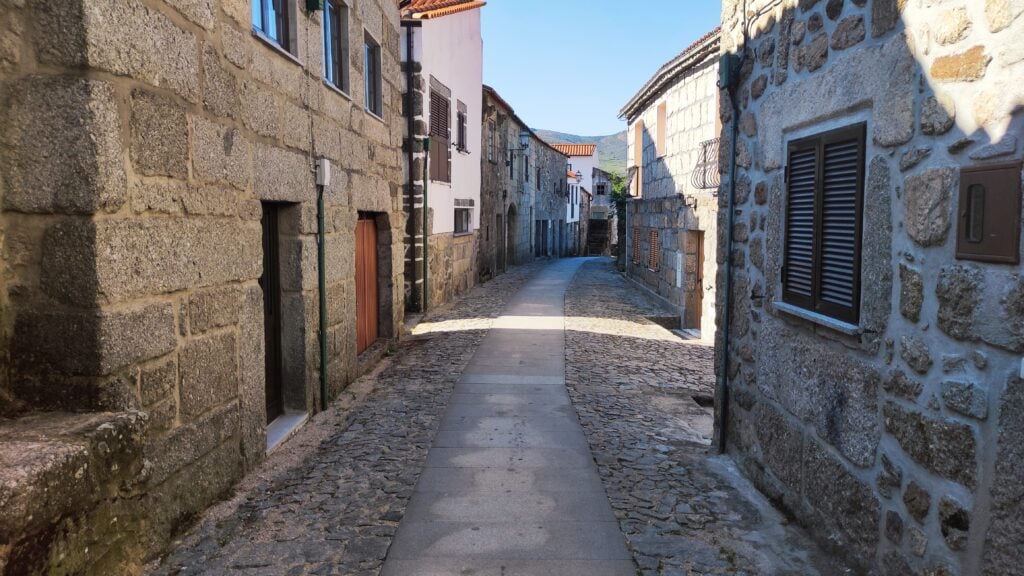
Located in the heart of the Serra da Estrela Natural Park, this medieval village, which received its first charter from King Afonso Henriques in 1169, is a veritable open-air museum and wandering through its streets and alleys, lined with granite houses, is a real journey back in time.
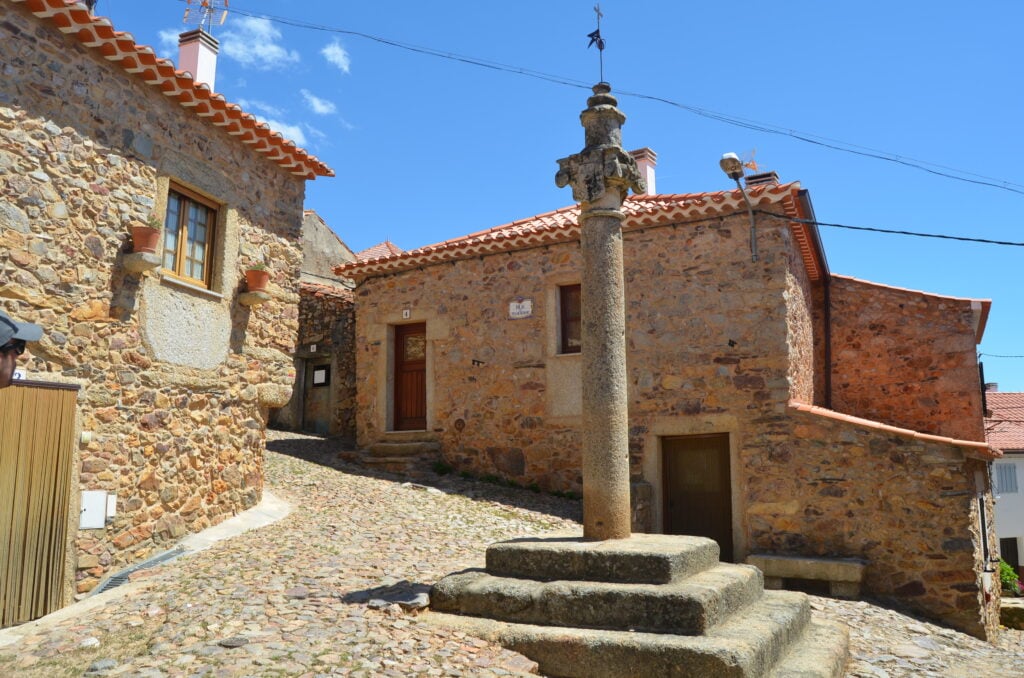
Among the must-see places are its majestic castle, the Mergulho fountain and medieval forum, the Casa do Judeu, the Old Guest House, the main church, the pillory and the Old Town Hall and Jail.
Fun fact, Linhares da Beira is considered the Paragliding Capital of Portugal because it has excellent conditions for practicing the sport. So, if you like strong emotions and little gravity, go for it!
Trancoso
Trancoso, Photo by Pedro Nuno Caetano (Flickr)
Go back to Celorico da Beira and hop back on the A25 highway. Then take the IP2 headed north for about 20 minutes. Trancoso should be on your left.
Due to its privileged location between the Douro, Côa and Mondego rivers, it has been the scene of disputes since time immemorial. It was considered central to the Romans, was a bastion in the Christian reconquest and the scene of the famous Battle of Trancoso, in which the Portuguese forces imposed a heavy defeat on the Castilian forces, which served as a prelude to the Battle of Aljubarrota.
Start your visit by crossing the admirable Porta d’El Rei, the perfect starting point for exploring the walled historic center of Trancoso, which in the distant year of 1281 witnessed the marriage of King Dinis to Isabel of Aragon.
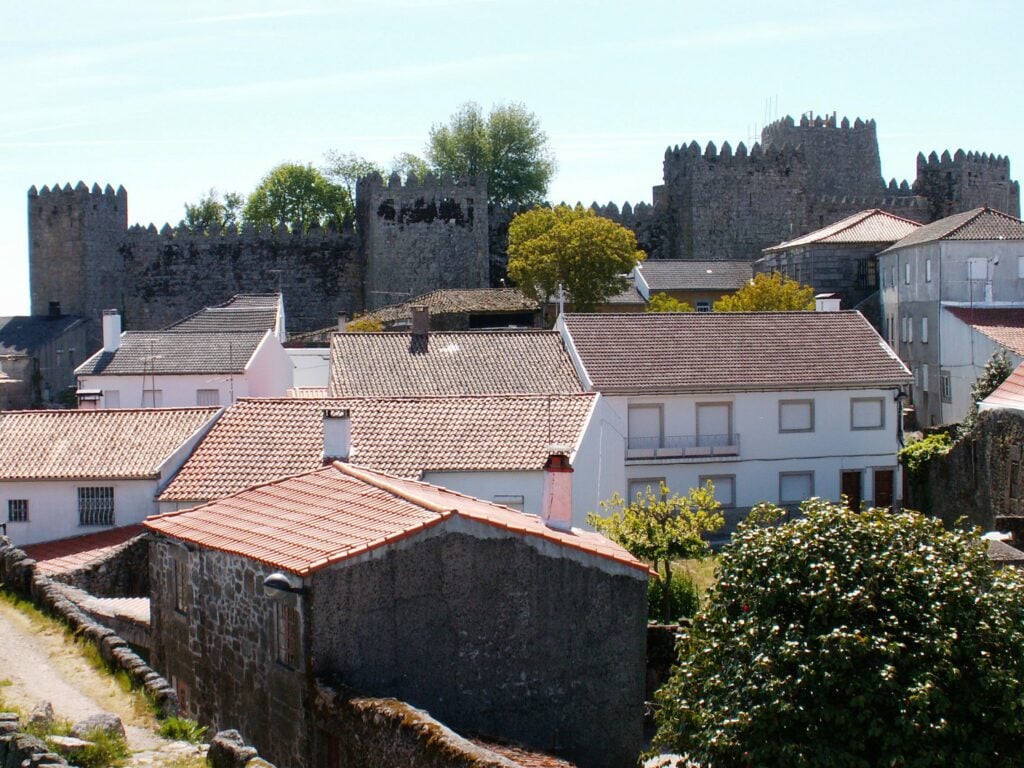
Take your time wandering through the medieval streets, let yourself be dazzled by the magnificence of the Town Hall and the Ducal Palace, admire the elaborately carved Pillory, visit the beautiful Churches of São Pedro and Santa Maria, cross the ramparts without trepidation through the Prado, Carvalho and Traição Gates, discover Trancoso’s Jewish heritage at the Isaac Cardoso Jewish Culture Interpretation Center, try to find the tiny Boeirinho and end your visit on a high by climbing up to Trancoso Castle, one of the oldest in Portugal.
Marialva
Marialva, Photo by Julen Iturbe-Ormaetxe (Flickr)
From Trancoso, it’s pretty easy to get here. Just take the IP2 for 20 minutes.
Marialva is closely linked to the tragedy of the Távoras because, at the time of the regicide against King José I, its mayor was the Marquis of Távora. This led to the population abandoning the citadel that existed inside the castle. This is precisely why the citadel is in ruins today. And so that you can better feel the weight of history, the decision was taken not to restore them.
Believe me, walking through the narrow streets of the village and visiting the ruins of the citadel inside the towering castle – balanced on top of a granite cliff – will almost instantly take you back in time.
Don’t forget to visit the Church of Santiago, with its Manueline portal, the Church of São Pedro, the 16th century Cistern, the old Town Hall and the Manor House of the Marquises of Marialva.
Castelo Rodrigo
Castelo Rodrigo, Photo by Julen Iturbe-Ormaetxe (Flickr)
Castelo Rodrigo looks like something out of a medieval movie. When you see its old walls in the distance, with their imposing turrets, and the golden houses perched on the hill, it’s love at first sight. It’s really easy to see why it was considered one of the 7 Wonders of Portugal.
Crossing the emblematic Porta do Sol is like stepping through a portal between two worlds. Castelo Rodrigo has more than a handful of monuments worth visiting. Among the most emblematic are the castle, the towers and turrets, the pillory, the medieval cistern, the main church and the ruins of the Cristóvão de Moura Palace.
But the best thing about Castelo Rodrigo is wandering around its medieval streets and discovering the little details that give it color, such as the Hebrew inscriptions and crosses carved on the doorposts and staves, marks of the presence of Jews and new Christians that time has not erased.
Northeastern Villages
One of the most unique fortresses in Europe, a walled village nestled atop a cliff, and the birthplace of the man who, over five centuries ago, discovered Brazil, propelling Portugal into a whole new era. These are just some of the highlights of this group of villages.
Almeida
Almeida, Photo by Marmontel (Flickr)
You’ll need to head southeast to get to Almeida. Take the N102, N324, and N340. After just one hour, you’ll arrive in Almeida.
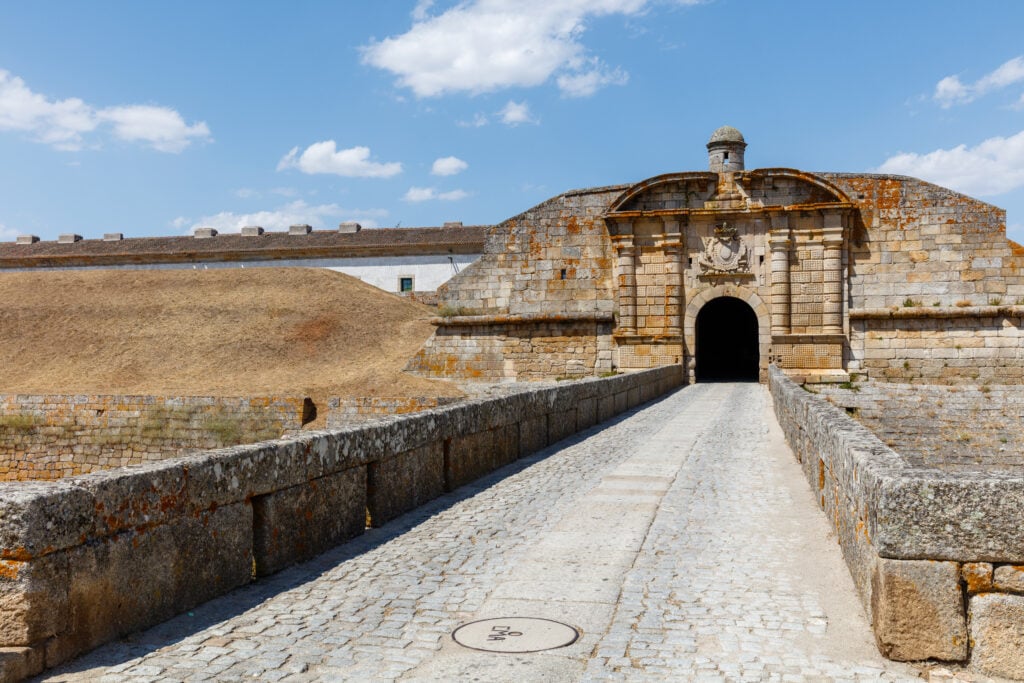
When seen from the air, Praça Forte de Almeida looks like a 12-pointed star, as many as the bastions and ravelins that surround it.
Needless to say, Almeida has been the scene of epic battles, one of the most famous being the “Siege of Almeida” in 1810, during the Third French Invasion. If you visit the city in August, don’t miss the historical re-enactment of this event. It’s best to bring earplugs, as the noise of the cannons is deafening.
Almeida is full of points of interest and so I highly recommend that you set aside a whole afternoon to visit the fortress, the Casa da Roda dos Expostos, the Casa dos Governadores, the castle ruins, the Picadeiro d’el Rei, the Paços do Concelho, the Casamatas, the Quartel das Esquadras, the main church, the Misericórdia church, the clock tower, the old cemetery and the Historical-Military Museum.
Castelo Mendo
Castelo Mendo, Photo by Pedro Nuno Caetano (Flickr)
Follow the N340 headed south and you’ll arrive in less than 30 minutes.
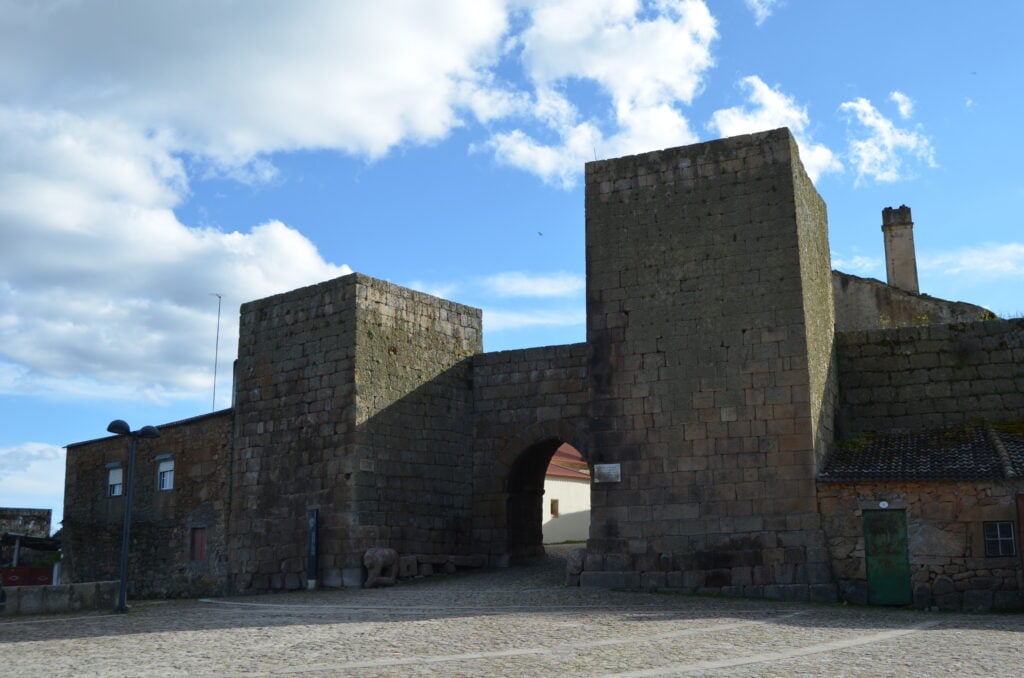
The devastating earthquake of 1755 may have knocked down the eight towers that protected the citadel and the walled village, but it didn’t dent the charm of Castelo Mendo. And you only have to pass through the arch of the Porta da Vila to see for yourself.
Stroll down the pretty right-hand street, observe the precious details of the Manueline houses, let yourself be amazed by the beautiful Pelourinho square (home to the Mother Church and the Alpendrada Balcony), visit the community oven and the old town hall, courthouse and jail (a real three-in-one) and climb up the medieval sidewalk to the highest point of the village to see the ruins of the Church of Santa Maria do Castelo and the old castle gates in situ.
Portugal’s first official fair was held in Castelo Mendo at the behest of King Sancho II. As such, every April Castelo Mendo organizes one of the best Medieval Fairs in Portugal. The setting is simply perfect!
Sortelha
Sortelha, Photo by Javier Habladorcito (Flickr)
Another straightforward drive. Just take the N324 headed south and you should start seeing Sortelha in the distance after about 45 minutes.
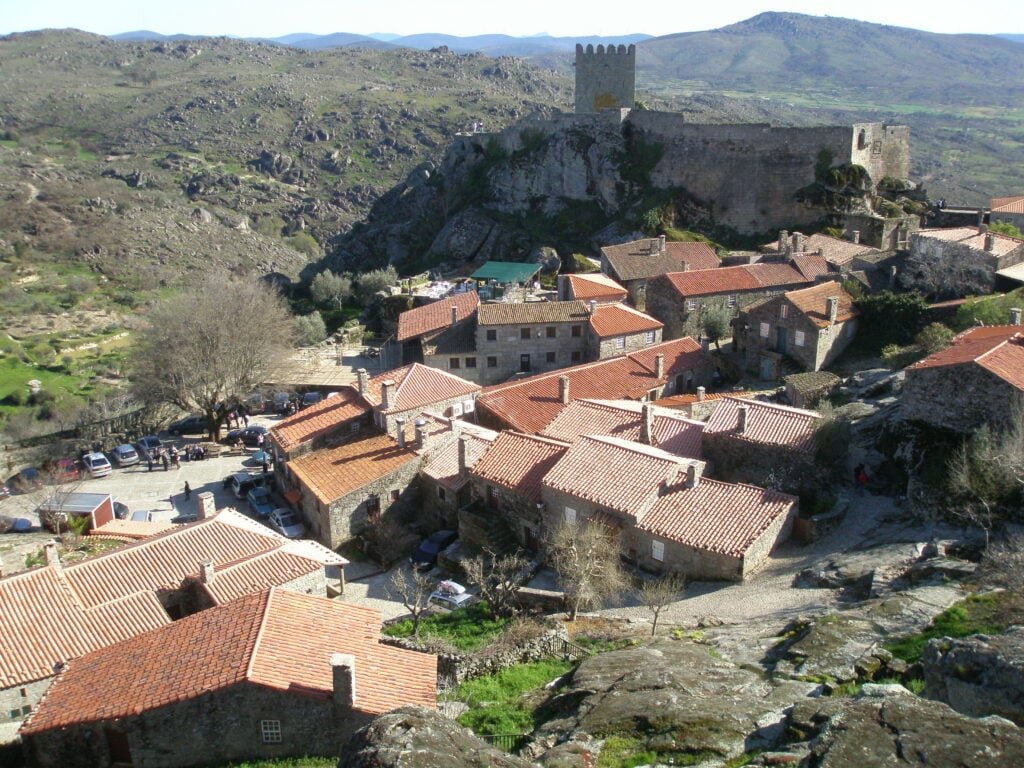
Sortelha is not only one of the best-preserved historic villages, but it also has a simply stunning landscape. From the top of its towers and walls, you get simply overwhelming views over the rugged Beira landscapes.
As you pass through the walls, which have protected it for centuries, you’ll feel like you’re in a real open-air museum. Walk slowly and savor the nostalgic medieval atmosphere of the village.
Among the many places of interest you can visit within the walls, the highlights are the impressive keep, the wall gates, the Facho tower, the main church and bell tower, the Casa dos Falcões, the town hall and jail in Largo do Pelourinho and the Arab House.
Outside the walls, I recommend visiting the Misericórdia Church and Hospital and looking for the famous Cabeça da Velha and Duas Pedras Beijoqueiras stones.
Belmonte
Belmonte, Photo by Pedro Nuno Caetano (Flickr)
Belmonte is only 20 kilometers away from Sortelha, so you’ll see directions everywhere. Just head west!
In addition to its strong connection with the Discoveries – as the birthplace of Pedro Álvares Cabral, the Portuguese navigator who discovered Brazil in 1500 – Belmonte also has a huge connection with the Portuguese Jewish community and even belongs to Portugal’s Jewish Quarters Network.
Learn all about the history of the powerful Cabral family and the discovery of Brazil by visiting Belmonte Castle (with its Manueline window), the Church of Santiago and Pantheon of the Cabrais and the modern Museum of the Discoveries, housed in the Solar dos Cabrais.
Take a trip to Largo do Pelourinho to see the historic Paço do Concelho and wander through the cobbled streets of the Jewish quarter. Visit the Jewish Museum and the Bet Eliahu Synagogue. A real journey through the past (and present) of Portugal’s largest Jewish community.
And make sure you visit the nearby Centum Cellas, in Colmeal da Torre. The most recent excavations say that it may have been a Roman villa dating back to the 1st century AD, but nobody knows for sure the purpose of its famous tower. Watching the sunset from Centum Cellas, with the Serra da Estrela on the horizon, is pure magic.
Southern Villages
This group of villages includes what is considered the “most Portuguese village in Portugal” that served as a filming location for House of the Dragon and a village that looks like a Nativity scene.
Monsanto
Monsanto, Photo by Javier Habladorcito (Flickr)
The easiest way to get there is to take the N345 toward Penamacor (also worth a visit). Then take the N332 for about half an hour and, if the fog is not too thick, you should be able to see Monsanto.
The village of Monsanto is divided into two distinct areas. The upper area, where the castle built by the Knights Templar stands, and the lower area where the houses stand.
In the lower part, the highlights are the main church, the Church of Misericórdia, the Torre do Lucano (a.k.a. the clock tower), the Cruzeiro de São Salvador, the Praça dos Canhões viewpoint and the iconic Casa entre Penedos (literally the “house between boulders”, you’ll know it when you see it).
To visit the summit of Monsanto, you can’t avoid a walk along the steep Penedos Juntos trail. The good thing is that along the way you can enjoy the fantastic views from the Penedo do Pé Calvo, visit the Monsanto cave and the castiças furdas (old pigsties).
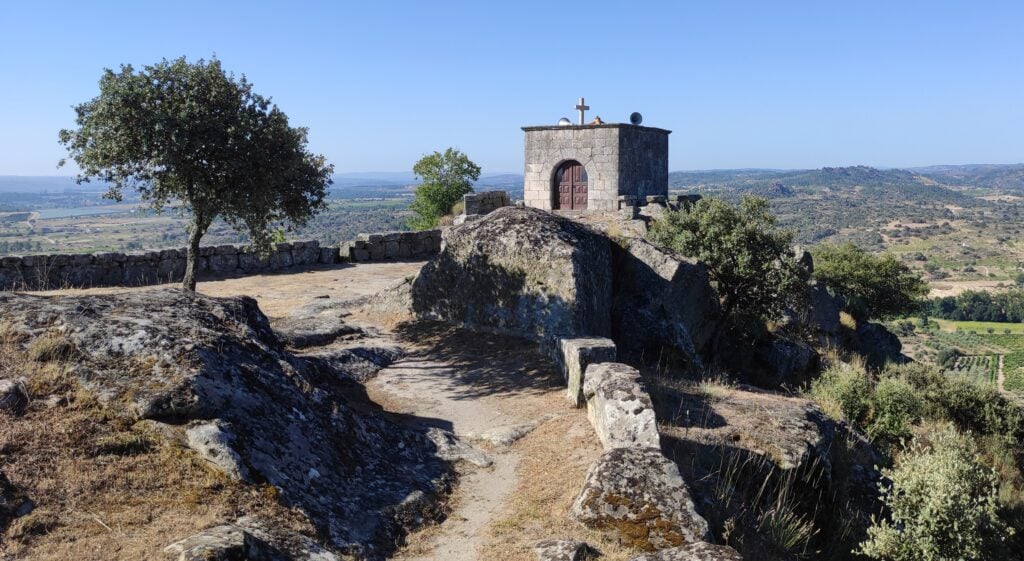
Once you’re in the upper part, don’t forget to go up and walk around the castle walls, and visit the ruins of the keep, the Chapel of Santa Maria do Castelo, and the Romanesque Chapel of São Miguel.
Idanha-a-Velha
Idanha-a-Velha, Photo by Carole Raddato (Flickr)
Located just 10 kilometers southwest of Monsanto, it’s incredibly easy to get there since it’s very well indicated.
This is one of the oldest villages in the network of historic villages in Portugal, with a history dating back to the first century BC.
It began as a Roman villa, was integrated into the kingdom of the Visigoths and Suevi after the barbarian invasions (at the time it was known as Egitânia), passed through Muslim hands, and was reconquered by the Christians in the 12th century and donated to the Order of the Templars by (guess what) King Dinis so that it could be rebuilt.
That said, it’s no wonder that every stone in Idanha-a-Velha has a story to tell. And Idanha-a-Velha does have a lot of stones.
The most emblematic sites in Idanha-a-Velha are the Cathedral (where elements of Roman, Paleo-Christian, Visigothic, and Medieval culture coexist), the archaeological remains belonging to the ancient Roman villa, the iconic Templar Tower, the Chapel of São Sebastião, the main church and the pillory, the Roman walls and the Roman bridge over the Pônsul river.
Castelo Novo
Castelo Novo, Photo by Julen Iturbe-Ormaetxe (Flickr)
Take the N332, then turn left to both the N239 and the N233 a few minutes later. Once you’re at Lousa, take the N18-7 to get to the A23. You’ll find Castelo Novo on your left.
The village of Castelo Novo is literally nestled on one of the slopes of the slender Serra da Gardunha, in a natural amphitheater landscape that lifts the soul.
Walking through its cobbled streets, bordered by a mixture of humble houses and opulent manor houses, with the sound of water flowing in its fountains as a soundtrack, has left its mark on our memory.
Among the places we most like to visit are the castle and bell tower (built on an impressive granite massif), the Town Hall Square, the main church, the Bica Fountain, and the Gamboas and D. Silvestre manors.
If you’re going in the summer, don’t forget your bathing suit, as there’s a delightful river beach just outside Castelo Novo. If you’re going in April, add at least one day to your tour and go and see the unparalleled spectacle of the cherry blossoms in Serra da Gardunha.
Piódão
Piódão, Photo by Mussi Katz (Flickr)
Getting to Piódão from Castelo Novo is kind of a long drive, but a very scenic and well-worth one. Hop back on the A23 and leave it once you reach Tortosendo. Then, take the N18-4 and the N230 headed west. After a very curvy drive, turn left (south) on the CM1134 and Piódão will emerge, hidden behind a curve.
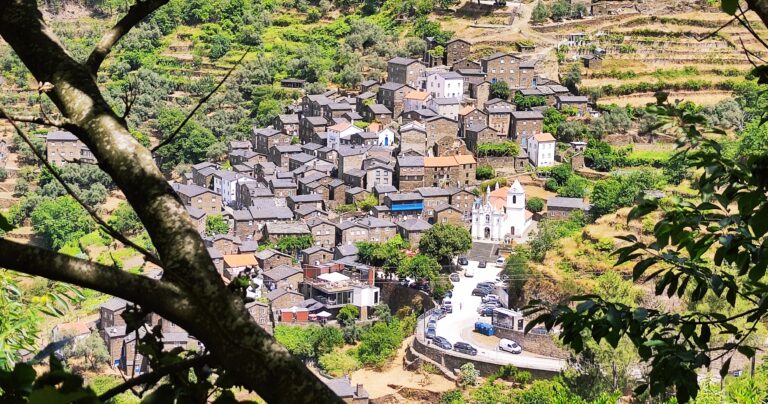
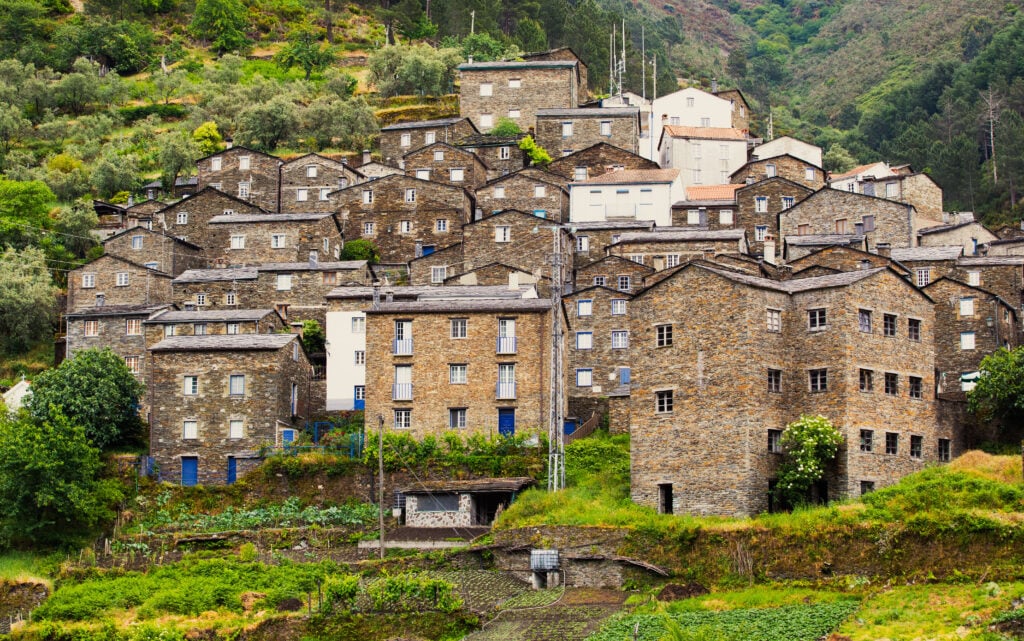
Piódão, also known as Aldeia Presépio, is without a doubt one of the most beautiful and idyllic villages in Portugal. Seeing its black schist houses and slate roofs, with their typical blue-painted doors and shutters, climbing up the hill, will make anyone fall in love. And if you see it at night, with the little lights dancing in the darkness of the hills, you’re liable to swear eternal love.
There’s no doubt that the best thing about Piódão is getting lost in its sloping schist alleys. But still, try to find some time to visit its Museum Center, the sui generis Church of Nossa Senhora da Conceição, and Piódão’s fantastic river beach (if you go in summer, don’t hesitate to take a dip).
Last Thoughts
Penha Garcia, Photo by Pedro Nuno Caetano (Flickr)
So, what do you think? By now, your leg muscles must be as strong as a marathon runner’s! The Historical Villages are one of my favorite destinations in the country and I try to visit as often as I can as they provide me with a great dose of nature, peace, silence, and history. All of them seem too tiny in the infinity of a globalized world, but they are so full of genuine people.
The Historical Villages serve as a gateway to immersive walking trails, leading you through enchanting woods where Portugal laurel and holly thrive. Explore layered valleys, remnants of glaciers, depressions, and water streams that enrich agricultural fields. Find waterfalls and unique rocky formations as you embark on this captivating journey.
And, hopefully, they’ll open your curiosity to visit some other locations off the beaten path. Places like Penedono, Folgosinho, Pinhel, Penamacor, or Penha Garcia are all in this region and, even if they are not officially part of this network, they’re well worth your visit. After that, you can head South, and explore another quaint network of villages famous for their white walls and red rooftops. I’m talking, of course, about Alqueva’s Riverside Villages.
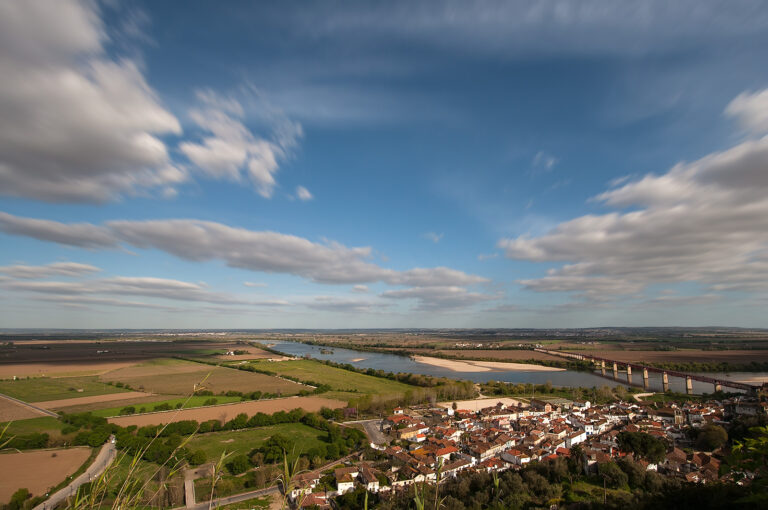
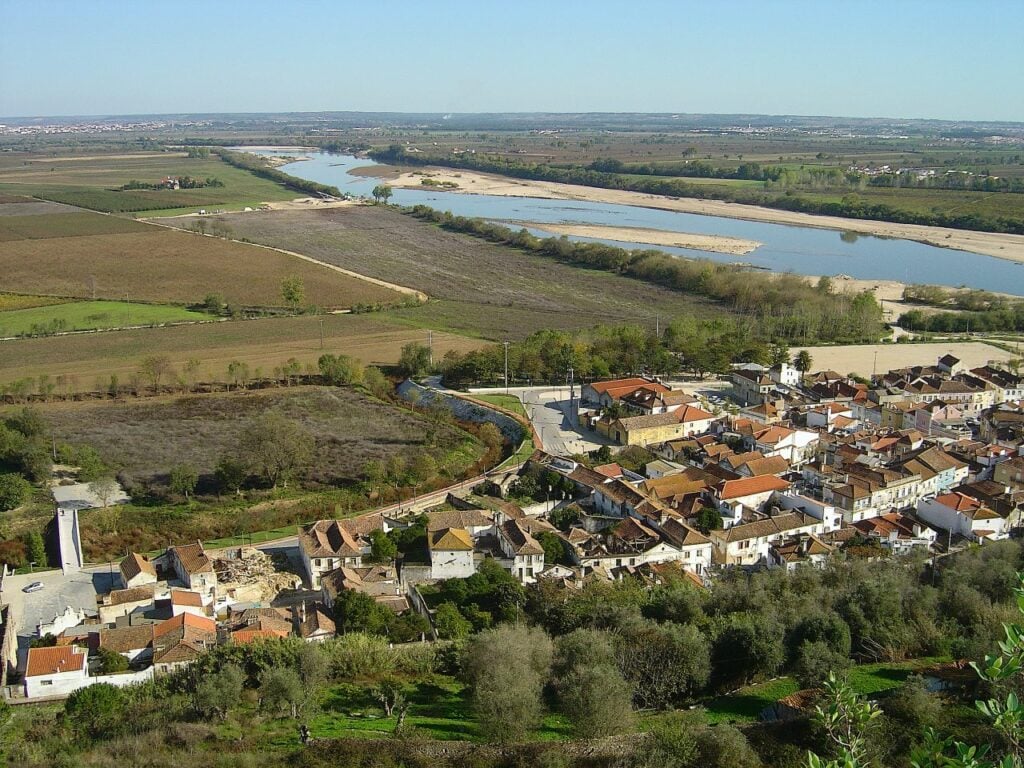
Perched high on a plateau, Santarém is a viewpoint over the fertile Lezíria region, the Tagus River valley known for its agriculture, cattle breeding, and bullfighting. Often overshadowed by Lisbon, just one hour away, the city has its own culture and traditions that both defined and stemmed from the old Ribatejo (literally “above the Tagus River”) region for centuries.
Santarém is located in Central Portugal and has excellent accessibility by road and rail. It is also conveniently served by the country’s main railway line: the northern line (double track, electrified, and with a large number of connections both to Lisbon and to other parts of the country).
The city of Santarém offers visitors theaters, cinemas, art galleries, and other spaces for cultural activities. Recently restructured, the Sá da Bandeira Theater offers a varied program, including lectures, music, theater, and cinema, among others. The Taborda theater, on the other hand, is mainly geared towards the presentation of plays.
The city was part of the territories of the Order of Christ, which financially supported the Portuguese Discoveries, and developed a great deal during that time, which is still reflected today in the monuments that are so important to the history of Portuguese art. So hop on, and let’s discover everything this city has to offer!
Santarém’s History: A Blast From the Past
Santarém has been desired and contested by various civilizations throughout the ages. Its names changed over time, reflecting different rulers and cultures. From its foundation as Scallabis, through Roman, Visigothic, and Muslim occupations, to its reconquest by King Afonso Henriques in 1147, leading to its current name.
The city’s roots can be traced to Greco-Roman and Christian mythology, and it played a crucial role as a trading post and administrative center during Roman rule. Islamic occupation saw Santarém’s cultural and artistic flourishing, producing notable poets and troubadours.
Reconquered by King Afonso Henriques in 1147, Santarém received charters to establish its municipal structure. The 14th and 15th centuries marked a golden age, hosting the royal residence and becoming a cultural hub. However, the Court’s presence diminished in the 16th century, and the 1755 earthquake caused significant heritage loss.
In the 19th century, Santarém faced challenges from French invasions and the Peninsular War. Liberal ideologies found support among the locals, but the extinction of religious orders in 1834 and the subsequent destruction of heritage raised concerns.
Elevated to district capital in 1837 and gaining city status in 1868, Santarém embraced modernity with the arrival of the railway and the construction of the D. Luís I Bridge. The town’s agricultural significance was revitalized in the late 19th century with agricultural exhibitions.
Santarém played a pivotal role in the political-military movement of the Captains of April 1974, contributing to the establishment of the democratic regime in Portugal. Throughout its history, despite changing rulers, it maintained its strategic importance and reputation as an administrative center and cultural hub.
How to Get To Santarém
By Plane
Santarém doesn’t have an airport, even though it’s one of the locations on the table for the location of Lisbon’s new airport.
By Car
From Lisbon, take the A1 highway northbound and follow the signs for Santarém. Depending on traffic, your trip should take somewhere between 45 minutes and 1 hour.
From Porto, you’ll also need to take the A1 highway, but this time southbound. Pass Aveiro, Coimbra, and Leiria during your 3-hour drive before you reach Santarém.
By Bus
There are multiple daily buses connecting Lisbon to Santarém. To catch one of them, get to the Sete Rios bus terminal, the main hub in the city. The ride to Santarém takes 60 to 90 minutes.
From Porto, head to the Campo 24 de Agosto bus terminal. There are several daily buses and the journey takes somewhere between 4 and 5 hours.
By Train
From Lisbon, you can catch the train to Santarém at either the Santa Apolónia station or the Oriente station. The trip takes less than an hour.
From Porto, you’ll need to head to the Campanhã station to catch your train. After just 2 and a half hours, you’ll reach Santarém.
When to Go to Santarém
In terms of climate, Santarém is one of the extremes. Summers in these parts are very hot and Santarém often sees sporadic torrid days in July and August. Winters are the complete opposite, with lots of rain and even days when it feels like Siberia. However, when the sun shines and you’re blessed with the mild temperatures of spring and fall, any afternoon stroll through Santarém is simply delightful.
Speaking of delights, Santarém has been synonymous with gastronomy in Portugal for over four decades. The Santarém National Gastronomy Festival usually takes place in the second half of October and brings together the best of our gastronomy and winemaking to one place, with representatives from the four corners of the country serving snacks, traditional dishes, and regional delicacies in the famous Tasquinhas de Santarém.
Another national event that Santarém hosts is the National Agriculture Fair in June. From the first Ribatejo Fair in 1954, it only took ten years for it to grow to the size of the largest national agricultural fair, which has now transcended borders.
Marked by the greatest Ribatejo traditions and icons, the great Santarém Festivities take place between March 15, the date of the city’s conquest, and March 19, a municipal holiday and the day of Saint Joseph, one of Santarém’s patron saints. The genuine Ribatejo character of the “festa brava” still animates it, with the unavoidable presence of its folklore, the fandango, and the emblematic figure of the campino, the unofficial Portuguese cowboy.
A focus of pilgrimage, the traditional Feasts of the Most Holy Miracle take place on Easter Sunday, with veneration of the Holy Relic, religious celebrations, and a grand procession through the streets of Santarém, decked out and covered in carpets of flowers.
What to See in Santarém
Wherever you come from, Santarém is love at first sight. The city stands tall on the plateau that dominates the Ribatejo marshes, with the Tagus River kneeling at its feet and swearing its love. Santarém emanates that fascination of cities that are unashamed of their age.
In its contrasts of old and new, bright and gray, noble and plebeian, it finds a balance that few others can achieve. Anyone who dares to know its secrets, to get to its heart, will find it hard to escape its charm.
To visit Santarém is to dare to uncover centuries of history, layer by layer. Prehistoric remains date the probable human occupation of the alcazaba on the Santarém Plateau back to the late Bronze Age.
Other peoples also passed through and settled here, leaving a rich legacy: Phoenicians, Romans, Alans, Vandals, Suevi, Visigoths, and Muslims until the Christian Reconquista made it definitively Portuguese. Bastion of the Tagus, the taking of Santarém was decisive in the formation of Portugal.
As one of the oldest continuously inhabited cities in Portugal, it’s easy to guess that Santarém is the guardian of an extremely valuable historical legacy. And it has all the ingredients for a perfect getaway: rich heritage, admirable architecture, cultural identity, delicious gastronomy, and friendly people.
Portas do Sol and Castle
Castle of Santarém, Photo by Vitor Oliveira (Flickr)
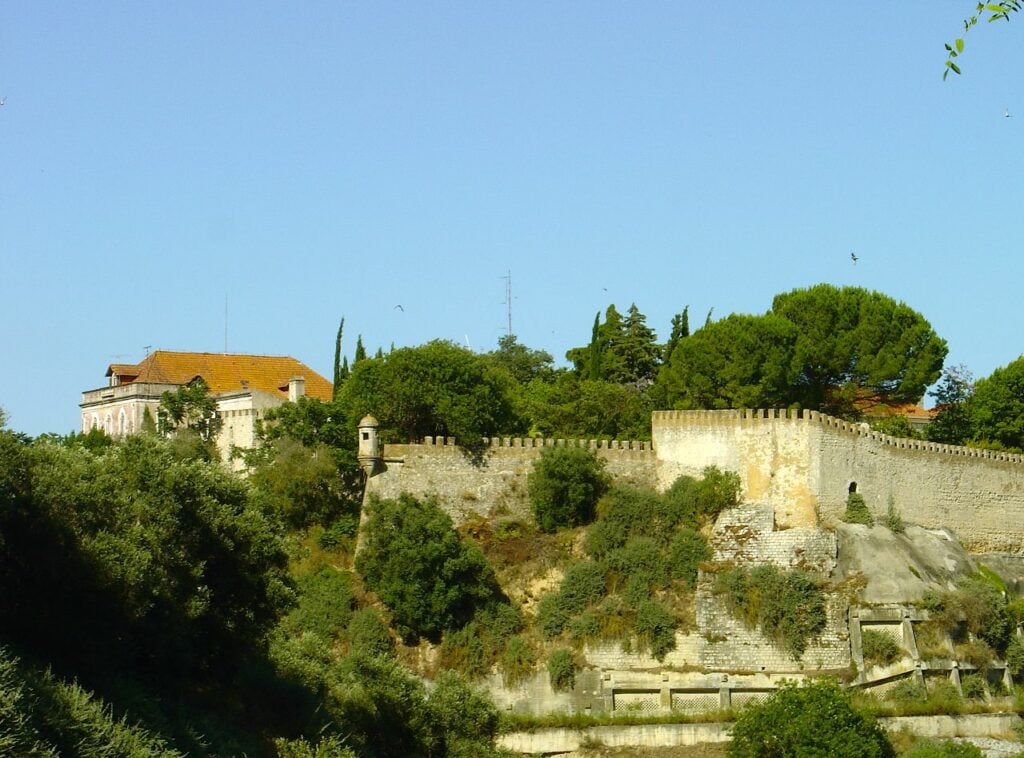
There’s no better place to start an itinerary to visit Santarém than at its ancient and lofty castle. Just follow the signs and you’re well on your way to one of Portugal’s most exciting viewpoints.
From prehistoric settlement to Portuguese castle, these stones have witnessed more than 28 centuries of human history. From the Roman “Scalabis”, to the Visigoth “Sancta Irena”, to the Muslim “Chantarim”, to current-day “Santarém”, ingeniously and audaciously taken by King Afonso Henriques in the dead of night on March 15, 1147, with just over two and a half hundred skilled Templar soldiers, via the vanished Porta da Atamarma. It is he, the first King of Portugal, who dominates the center of the garden, represented by a bronze statue – any resemblance to the statue of King Afonso Henriques in the town of Guimarães, by Soares dos Reis, is no coincidence.
But the best way to learn the story of this ancient space is at the Urbis Scallabis Interpretation Center in the garden grounds, which exhibits archaeological finds from the ancient alcazaba and tells the story of Santarém, from prehistory to the contemporary age, in multimedia format, and which is well worth a visit.
Cathedral
Cathedral of Santarém, Photo by João Alves (Flickr)
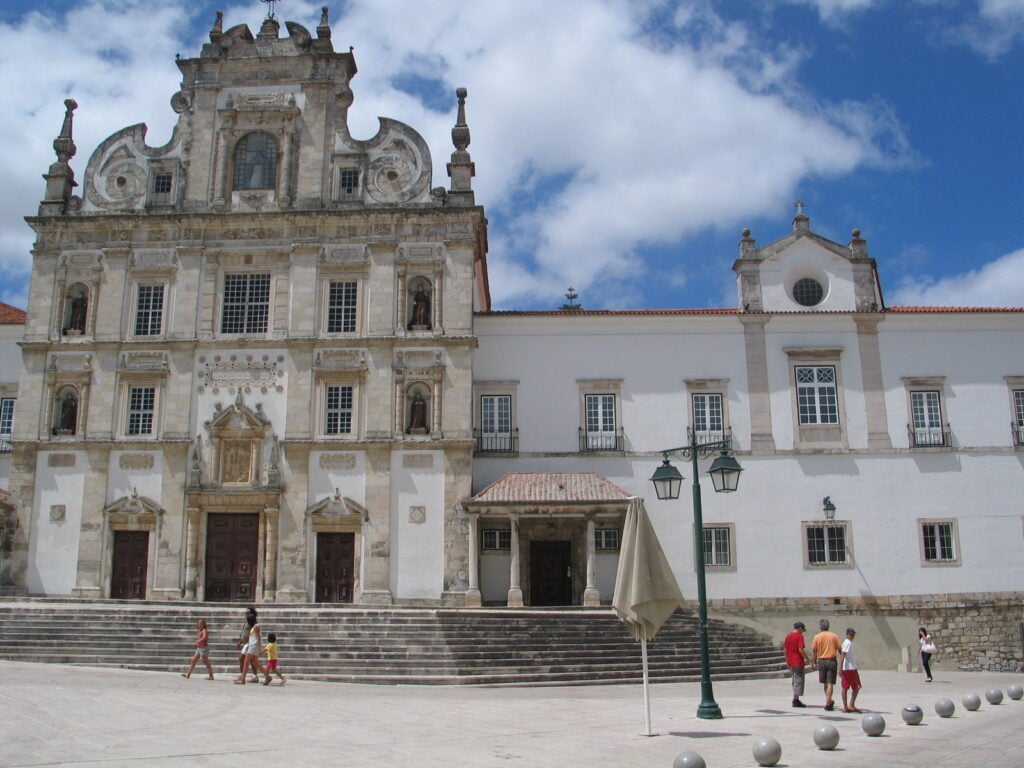
The Church of Nossa Senhora da Conceição, initially owned by the priests of the Society of Jesus and, after 1780, by the Patriarchal Seminary of Santarém, is one of the most important and beautiful sacred monuments of the Scalabitan heritage.
The interior of the single-nave temple has eight side chapels, where the splendor and richness of the Baroque dazzle us, in clear contrast with the sobriety of the frontispiece. The ceiling of the nave, in a prospective painting, from 1728 with the iconography of the ascension of Our Lady, Jesuit figures and allegories to the parts of the then-known World.
The beautiful ceiling of the Main Chapel is the work, from an architectural perspective, of the Scalabitan painter Luís Gonçalves de Sena, executed in 1754 and which complements the enchantment that the entire interior decoration conveys to us.
Eugénio Silva Palace and City Hall
Santarém’s City Hall currently occupies the Meneses Palace, a beautiful example of sunny civil architecture from the mid-17th century or, at least, the end of the 17th century.
The palace has classic lines, elegant and sober facades, full of bay windows with their characteristic 18th-century moldings and curiously pinnacled. Above the windows, the architect opened small openings for lighting the attic. The main entrance is located in the middle of the North façade, with a modeled and pinnacled stonework door, in the middle of which, on the lintel, was placed the central window, surmounted by a triangular pediment. Above the crack in this window is the coat of arms of the Meneses family, the first owners and providers of the marshes in the 18th century.
Town Market
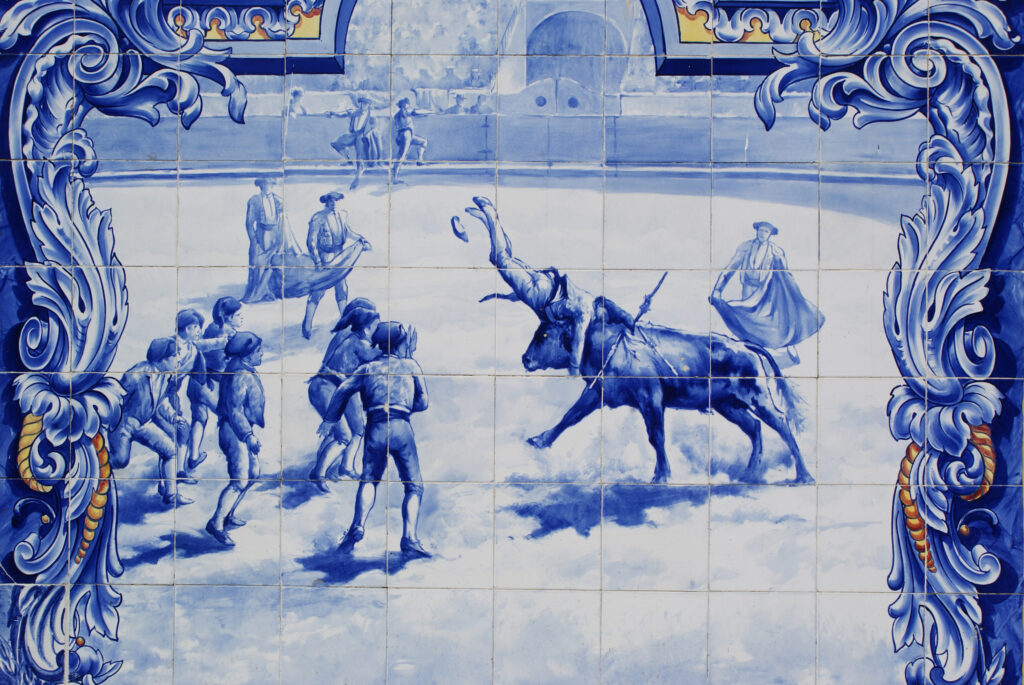
In Santarém’s Town Market even the traditional painted tiles allude to the city’s bullfighting tradition, Photo by Lux Machina (Flickr)
Dating from 1930 and designed by architect Cassiano Branco, it replaced the open-air market that had survived for centuries in Praça Visconde Serra do Pilar, known as Praça Velha.
In addition to the building’s architectural language, its exterior features a remarkable set of fifty-five figurative and eight decorative tile panels commissioned from the now-defunct Sacavém Factory, which represent the tourist and regional advertising motifs that characterized the Ribatejo capital at the beginning of the 20th century.
Monastery of Santa Maria de Almoster
The Monastery of Santa Maria de Almoster was founded on the initiative of Lady Berengária Aires, a lady at the court of Queen Isabel, in fulfillment of the will of her mother, Lady Sancha Pires, to erect a monastery of Cistercian nuns in Almoster.
The complex consists of the church, the dormitories (in ruins), the old refectory, and the chapter room, arranged around the cloister, of which only two sections remain. On the floor of the chapter room, there are several tombstones of abbesses, and above the benches you can see a row of 18th-century tiles.
The church, which follows the Mendicant Gothic style, is made up of three five-section naves with ogival arches, separated by pillars with pilasters attached, decorated with floral capitals.
The internal space of the temple is divided by the construction of a low Mannerist choir, which separated the area for the religious from the part for the laity.
King Luís Bridge
An important engineering feat among the metal bridges of the industrial era in Portugal and a remarkable example of iron architecture, it was inaugurated on September 17, 1881, linking Santarém to Almeirim. At the time, it was considered the largest in the Iberian Peninsula, the third in Europe and the sixth in the world. It was refurbished in 1956 to a design by Edgar Cardoso.
Ribeira de Santarém
Ribeira de Santarém, Photo by Vitor Oliveira (Flickr)
An old town linked to the river traffic that once made Santarém the gateway to Ribatejo. Houses, lanes, and alleys, as well as a few monuments (Santa Cruz Church and Palhais Fountain), make it attractive. On the banks of the Tagus, the standard of Santa Iria perpetuates the memory of the appearance of the Saint’s tomb to Queen Santa Isabel and King Dinis.
Last Thoughts
You might have noticed that I didn’t include any suggestions on where to eat, and that’s no accident. The truth is that you can find a great restaurant anywhere you go in Santarém. Just avoid anything with “chez” or any English words in their names, and you’re bound to have a great meal. I feel like picking just two or three restaurants to highlight would be unfair and reductive for a city that is known for serving great food.
But what do you say? Will you give Santarém a try? It’s only one hour away from Lisbon, so time and distance are not an excuse. Trust me, just hop on a train, walk up the castle, and sit bit the walls to watch the sunset on the horizon. Trust me, you’ll wish you could spend more time in this fantastic city.
Deep inside southern Portugal, lies the Alentejo region. A land of vast countryside and scorching summers, often seen as a desert by its own country, even though it was once described as the “nation’s breadbasket”. It was home to many different peoples through the years, from the Romans to the Moors and the Christians.
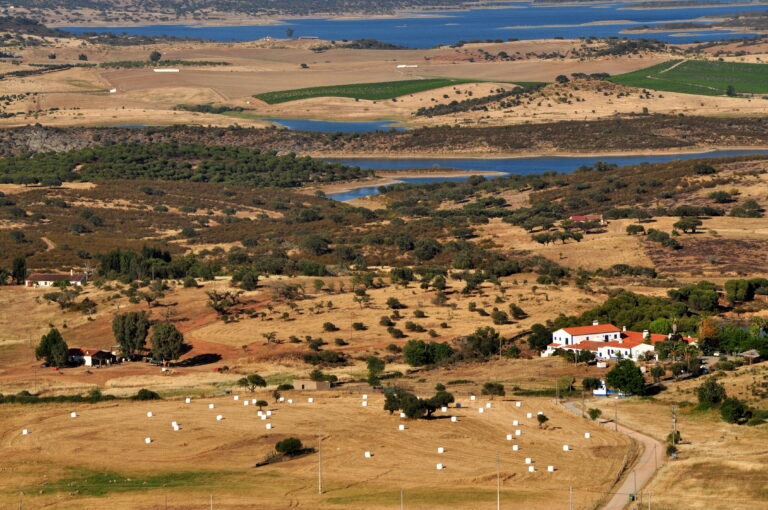
But the Alentejo has changed. Today, it is more of an olive grove than a breadbasket, multiculturalism is now a reality and, most importantly, it is now an oasis, not a desert. And this is thanks to the Great Lake of Alqueva, a dam that took over three decades to conclude and completely reshaped the region.
At the time of its construction, it was Europe’s largest artificial lake, extending for over 250 square kilometers, and encompassing three municipalities and two districts. Its main purpose is energy production and as a water reservoir, but in my opinion, its biggest achievement was creating a beautiful inner sea on a countryside background that is still fairly unexplored by tourism.
It was within this context that a group of previously forgotten villages rose to prominence and presented themselves as quaint, charming options for travelers looking for a truly genuine experience, away from the crowds and right in the middle of the countryside, but with many entertainment options for the adrenaline junkies too.
I’m talking, of course, of Alqueva’s Riverside Villages, a network of sixteen villages located on the shores of the Great Lake, famous for their white houses and red roofs, cobbled streets, with only a few hundred inhabitants each, and with the countryside a stone throw away.
I hail from this region, so it is with a lot of pride and pleasure that I came up with an itinerary that you can complete in a single day or, ideally, during a full weekend to make the most out of it. The route I chose starts at the northernmost village of Juromenha and follows a centripetal, counter-clockwise path before concluding at Monsaraz, the crown jewel of the region.
This guide includes descriptions of each village, suggestions on where to stay for the night, where to eat, when to go, and what to do. It’s as complete as it gets, so make sure to give it a read before you head to the Alqueva Lake, so you don’t miss a thing. Ready? Let’s go.
Juromenha
Juromenha, Photo by Rui Ornelas (Flickr)
Our journey starts in the municipality of Alandroal, in Alto Alentejo. Getting there from Lisbon is fairly easy. All you need to do is take the 25 de Abril bridge and follow the A2 highway. After about 40 minutes, switch to the A6 at Marateca towards Évora and just drive all the way until you reach Elvas after around one hour. From there, just take the N373 for less than ten minutes and you should be there.
Juromenha is a Portuguese parish in the municipality of Alandroal with around 100 inhabitants. Located at the northeast end of the municipality, it borders the disputed Territory of Olivença to the southeast. It is the smallest parish in the municipality in terms of area, population, and population density.
It was the seat of a municipality, which was abolished around 1836, and included the parishes of Juromenha and São Brás dos Matos and, in 1801, it had 823 inhabitants. The town of Vila Real, located beyond the Guadiana, administered by Spain since 1801, and part of the municipality of Olivença nowadays, belonged to the municipality and parish of Juromenha.
Juromenha’s origins go back a long way, having held the honorable position of sentinel of the River Guadiana, which flows at its feet. It was conquered by King Afonso Henriques in 1167. It then entered the domains of the Order of Avis, to whom it was donated by King Sancho I. Some important episodes took place there during the 17th-century Restoration War and the 19th-century Peninsular War.
After it was annexed to the municipality of Alandroal, Juromenha began a process of decline, which was accentuated in the 1920s, when the population completely abandoned the area within the walls and the suburbs developed around the hermitage of Santo António, which is today the fundamental nucleus of the town.
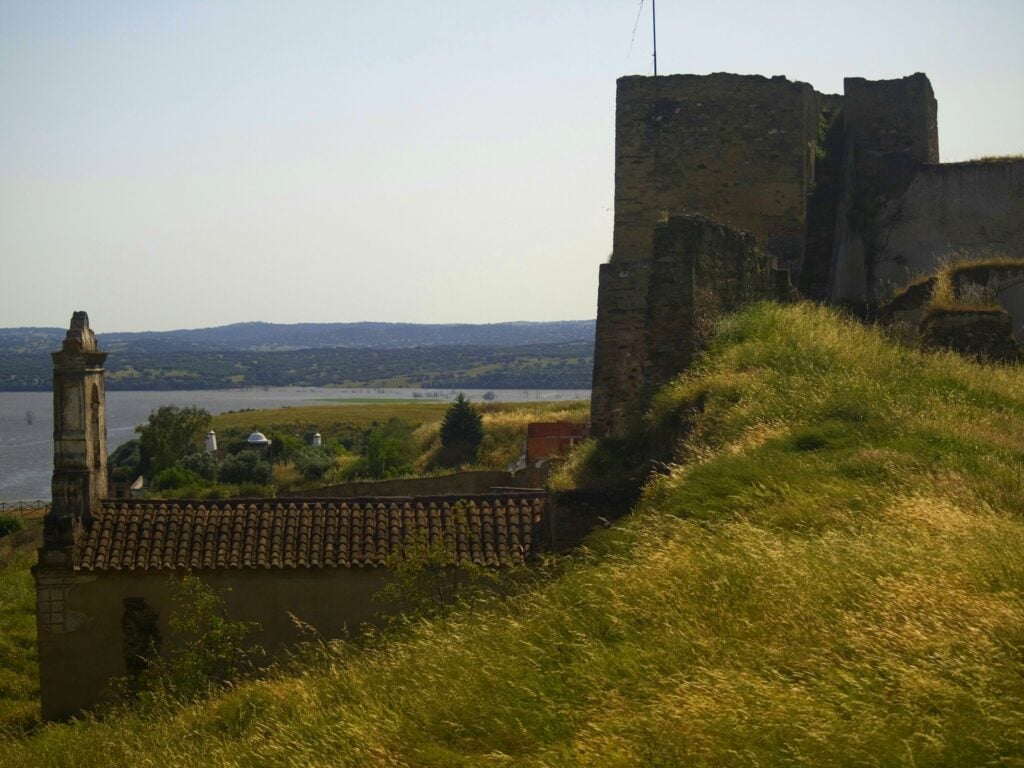
The fortress, which has a polygonal plan, is the village’s highlight. Today, inside the walled enclosure, there are the ruins of two churches, the jail and the old Town Hall. In landscape terms, the old fortress has a privileged location in terms of the visual domain of the Portuguese and Spanish territories.
Capelins
Our trip continues along the N373, which we will follow for about 10 minutes before taking a left toward “Mina do Bugalho”. Then, after 15 minutes, we arrive in the often-overlooked village of Capelins, also known as Santo António.
With nearly 400 inhabitants, it feels like a metropolis in comparison to Juromenha, even though it doesn’t boast a history nearly as impressive. It is not directly overlooking the water, but it is instead surrounded by rolling, green hills that calmly move as the wind blows, creating a very relaxing landscape.
Located on the south-eastern edge of the municipality, the parish of Capelins is bordered by the municipalities of Mourão and Reguengos de Monsaraz to the south – both of which make for great “headquarters” to spend the night during this trip – and Spain to the east.
Until 1836, the parish of Capelins belonged to the extinct municipality of Terena, whose origins are very old, dating back to the 13th century when it was first granted a royal charter. Through its castle, the town of Terena played a very important role in border defense, being, like Monsaraz further south, a point on the Guadiana defense line.
Monte do Trigo
After leaving Capelins behind, you should take a left to the N255 and follow it until you reach Casas Novas de Mares. Right after leaving it, take a right toward Montoito. After crossing Montoito, take the M513 until you reach Vendinha and take a right to the N256. After about 10 minutes, take the IP2 toward São Manços, pass it, and you should find Monte do Trigo on your left after just a few kilometers.
Everything indicates that Monte do Trigo was, in the 13th century, already a very important and fundamental space, both in terms of its geographical location as a distributing node of the road network that served the region and in terms of economic resources, which meant that these lands were not included in the donation made by King Afonso III to the nobles.
In 1283, King Dinis exchanged it for the town of Alvito, which then became the property of the Monastery of the Trinity of Santarém. In the 15th century, part of this reguengo was donated to the Countess of Faro. Subsequently, the whole area became part of the patronage of the House of Bragança.
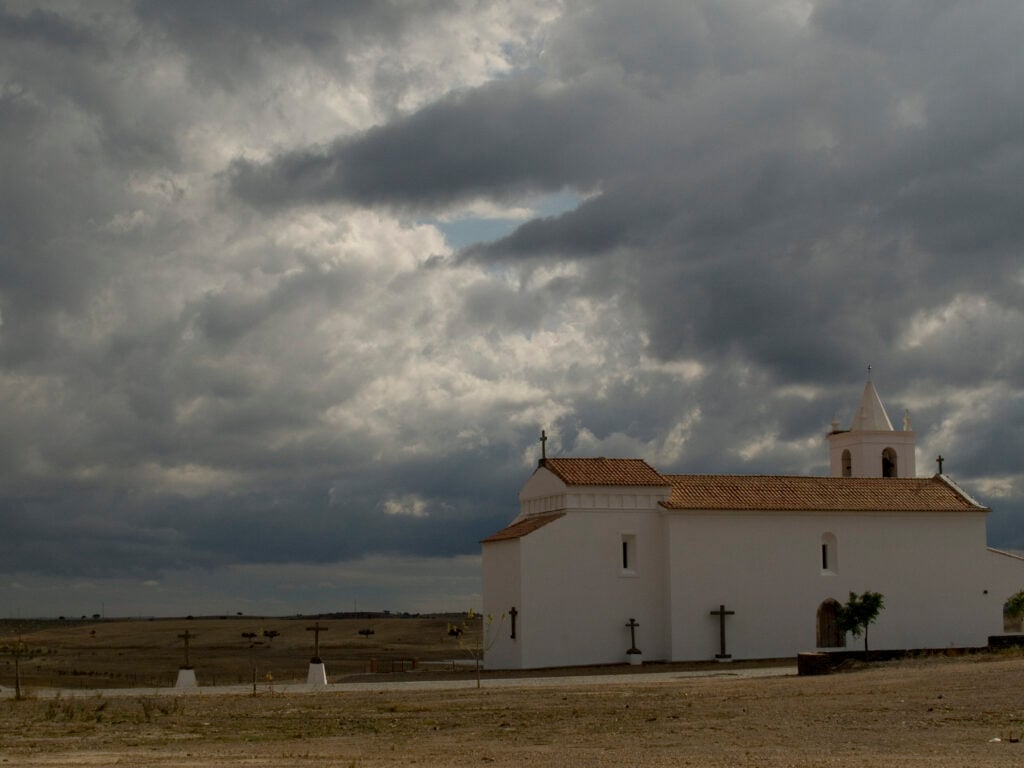
The original church of the village – whose name literally means “wheat hill” – apparently built in the 16th century, disappeared completely between 1946 and 1947, giving way to the current church, which was built on the same site and is the highlight of the village.
Amieira
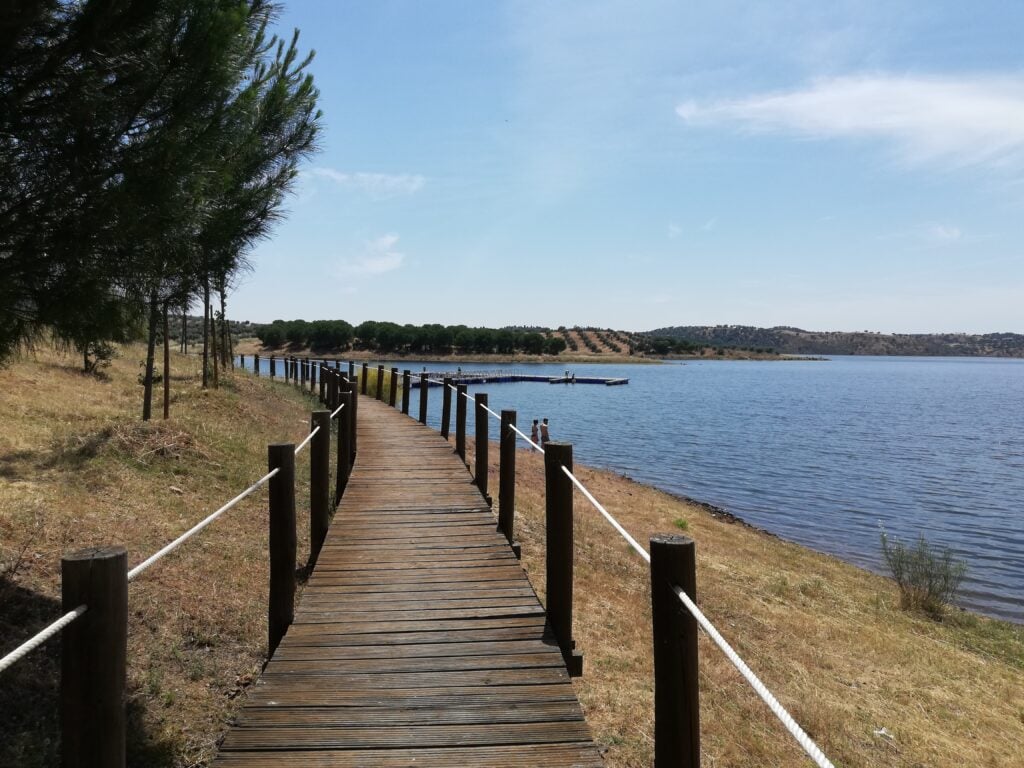
A walkway near Amieira’s riverside beach, Photo by Fernando Moital (Flickr)
From Monte do Trigo, it’s very easy to get to Amieira. Just take the IP2 again and get out at Portel. Then follow the directions to Moura, taking you along the R384. After about 10 minutes, take a left following the indications to Amieira, which will take you back to the N255. You’ll be able to see the village in the distance.
Amieira is a quiet village situated in a valley between the Amieira stream and the Degebe river, it is today a riverside village on the large Alqueva lake that draws crowds during summer thanks to its very pleasant artificial beach.
The word “amieira” or “amieiro“, which means “frequent tree in wetlands”, may be the origin of the name of this parish. The proximity of water from various streams, and especially the River Degebe, would make those lands humid, allowing for an abundance of vegetation, including alder trees. This natural name may have come to identify the place, along with the name given to the parish: Nossa Senhora das Neves da Amieira.
Amieira is home to a Marina that has an incredible restaurant and offers a wide range of nautical products, services, and activities such as river cruises, boat rentals, and water sports.
Alqueva
Alqueva Lake took its name from the nearby village, Photo by Vitor Oliveira (Flickr)
From Amieira, you’ll need to drive back along the N255 toward Moura. Then take a left, which will bring you back to the R384 and after just a few minutes you’ll reach Alqueva.
The village of Alqueva is part of the municipality of Portel, in the district of Évora. The first references to this village appear in documents from 1285. The name “Alqueva” derives from “alqueive“, which means “fallow land” or “deserted land”, which is due to its very dry and rough soils, which was one of the biggest obstacles to the development of this region.
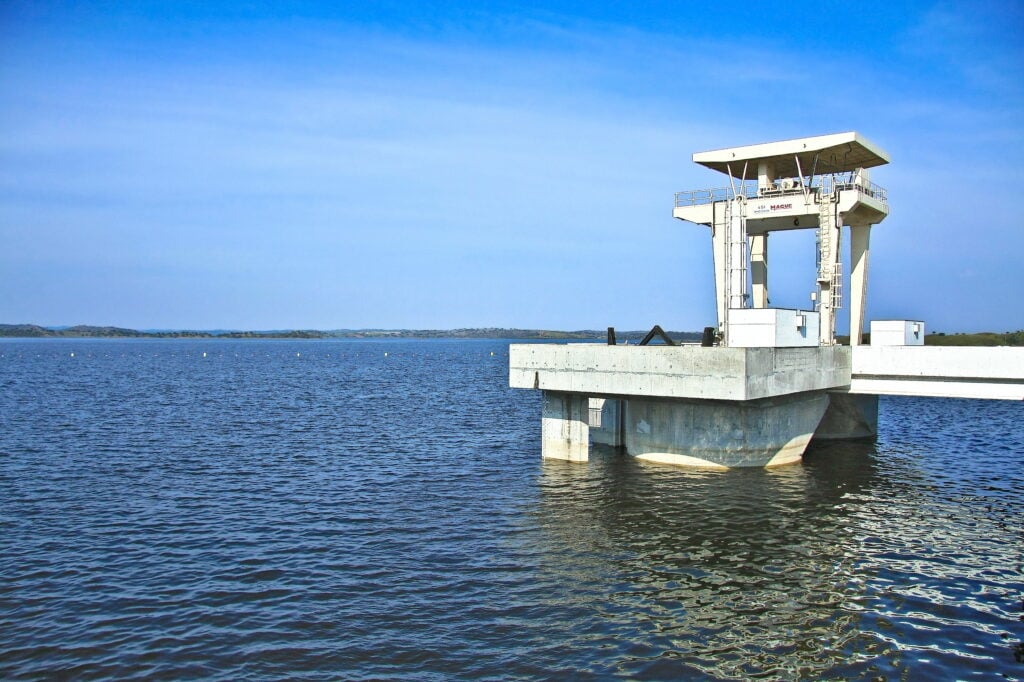
But it all changed a few decades ago when a proposal was made to build a dam next to the village with the aim of irrigating the soils and bringing development to a region whose main activity was agriculture. The dam is, of course, the Great Lake of Alqueva, which took its name from this village.
Recently, the parish built an artificial beach just outside the village, making it a great spot to park your car and head for a dip in the warm waters of the lake.
Marmelar
You won’t need to switch roads to get to Marmelar. At the roundabout in Alqueva, there are indications for Marmelar and Vidigueira. Just follow that road for 15 kilometers and it should take you there. During this quick ride, you’ll cross from the Alto Alentejo region to the Baixo Alentejo region. See if you can spot the differences in the landscape!
The village, which throughout the years has been part of the municipalities of Beja, then Cuba, and finally Vidigueira, has its origins shrouded in mystery, but some architectural testimonies reveal a very old settlement.
Located on the right bank of the Guadiana, Marmelar has always enjoyed favorable conditions for human settlement, as witnessed by the Corte Serrão dolmens, which tell us about the occupation of this region during the Eneolithic period, when the dead were worshipped through the construction of funerary monuments.
The picturesque Church of Santa Brígida in Marmelar is worth a visit while you’re here. It dates back to the 16th century and it’s a great example of traditional religious architecture in the region.
Pedrogão
Pedrogão is the head of the parish Marmelar is a part of, so it won’t be hard for you to find directions leading you there. The trip from Marmelar to Pedrogão takes less than ten minutes, so just enjoy the warm breeze and the vineyards on your way there.
The Pedrógão dam, which is part of the Alqueva development, was built next to this peaceful village in 2006 with the aim of stabilizing the flow of the River Guadiana downstream of the Alqueva dam, to produce electricity and supply water for irrigation, so these lands have since become very fertile, something they didn’t always benefit from.
Even the name “Pedrogão” seems to come from the word “pedra”, which means “rock”. You can still see a lot of rock formations scattered around the village and a lot of those were collected and transported to the nearby Corte Serrão dolmens, which are worth a visit.
Mina da Orada
Back on the N258, cross the wide bridge over the Guadiana, and it’s only five minutes before you see the plaques directing you to Orada. Take the right exit and the village is right ahead.
A village in the parish of Pias, in the municipality of Serpa, Orada is located next to the Pedrógão dam. It’s a small village whose main economic activity was mineral extraction until the mine, located next to the town, was shut down in 1971.
Its main attractions are the Chapel of Nossa Sra dos Prazeres and the old magnetite mine, now flooded, which is a popular place for diving. If you do decide to jump in, make sure you bring company or have spotters since it is actually not allowed – even though locals do it all the time.
The lake of the Orada mine is a very beautiful place, inspiring tranquility as only the Alentejo is capable of instilling, and is a popular spot for locals. According to those who have dived here, diving in the lake is relatively simple with very acceptable visibility and some life to discover. There are several galleries and tunnels that are interconnected. However, entry to the galleries is not recommended for anyone who is not certified for cave diving.
Póvoa de São Miguel
From Orada, you’ll need to get back to the N258 and head toward Moura. This city – where yours truly hails from – is a great place to spend the night and break this itinerary into two legs with eight villages per day. You’ll cross Moura from the west to the northeast, taking the N255 and crossing the River Ardila. Right after the bridge, take a right and switch to the N386 which will take you to Póvoa de São Miguel.
Póvoa de São Miguel is located in the municipality of Moura, on the left bank of the Guadiana River, halfway along the road linking Moura to Mourão. It stands on a high point from where you can see Monsaraz Castle. Next to the village runs the Ribeira do Zebro, which is now a branch of the Alqueva dam.
The village’s origins date back to the end of the 14th century, following the Sesmarias Law, published in 1375 by King Fernando, whose aim was to settle people in the countryside. The black plague ravaged Europe during this period and had a particular impact on the cities, where the mortality rate was very high, causing a shortage of manpower and causing wages to skyrocket. This led to the aforementioned exodus from the countryside to the cities, leaving the fields abandoned with a consequent lack of cereals and other agricultural products in the country.
As a curiosity, the population of Póvoa had, in the 2021 census, 761 inhabitants. The official name of the town was just Póvoa, but for many years it had been known among its inhabitants as Póvoa de São Miguel, in honor of its patron saint, and this name was made official in 1988.
Estrela
Sunset at Estrela’s pier, Photo by Paulo Valdivieso (Flickr)
Drive across the village, following the directions to Mourão. Following the M517, it’s only a short drive before you see the indication for Estrela to the left, sitting on a peninsula, directly facing the Great Lake.
Due to its exceptional location, an anchorage was built where the boats that cross the Alqueva dam dock. It’s a great place for a stroll, a picnic, or even a swim. It’s also a great place for lunch. Sabores da Estrela was an incredible restaurant, but it recently closed. But this tiny village has other great restaurants, so make sure you try some migas or an açorda.
Granja
You’ll need to drive back to the M517, but only for a few meters. Turn right toward Amareleja/Granja. Follow the road for 15 minutes until you reach the N385, where you’ll take a left and, once again, return to the Alto Alentejo region. Granja is right ahead.
Granja is located next to one of the dam’s branches, the Alcarrache stream. Its heritage includes the Head Church, which stands out from the other houses in the village. Built in the 16th century, it has a rectangular floor plan and a large nave, and its interior contains paintings of great interest. Also noteworthy is the Church of Santa Casa da Misericórdia right in the center of the village.
Historically, little is known about the history of this village, largely due to the constant pillaging by the Spanish during the Restoration War. However, there are references dating back to the 13th century to a “Granja do Hospital”, administered by the regimental order of the Freires do Hospital.
It is, however, known that the Romans and Arabs also inhabited this region, leaving behind bridges over the rivers Alcarrache and Godelim, as well as several Moorish chimneys.
Aldeia da Luz
Aldeia da Luz, Photo by Rui Ornelas (Flickr)
The N358 will take you across one of the most beautiful bridges you’ll see in Portugal, over the Alqueva Lake. Once you get to Mourão, follow the directions to Estrela/Luz until you find yourself on the M517, where you’ll need to turn right after a while and head southwest until you reach Luz.
No other village is more symbolic than Aldeia da Luz. That’s because this is actually not the original village. The original village lies under the waters of the Alqueva Lake. The new village was built in such a way as to essentially maintain the characteristics of the old village, inch by inch.
The issue of relocating the inhabitants of the village of Luz began in 1981. Three options were considered: compensate the inhabitants, transfer them to a neighboring village, or build a similar village. This last alternative was chosen and was preferred by the population, so construction began in 1998 and finished in 2002.
Today, it is a beautiful village right by the water and its recent construction gives it a very clean and neat look that makes it very unique. The village also has a museum dedicated to preserving the memory of the old village that is definitely worth stopping by.
Campinho
You’ll need to head back to Mourão and this time follow the directions to Reguengos de Monsaraz. This should put you on the N256 and, once again, you’ll drive across a bridge over the lake. If you look to your right, you’ll spot Ilha Dourada, an island with an artificial beach that you can visit by boat. It’s as peaceful as it gets. Once you get to Reguengos, follow the directions to Évora/São Marcos do Campo. Once you get to the N255, follow it until you reach Cumeada, then take a left to the M532 which will get you to Campinho in no time.
An airfield and mooring have been built next to the small village, so it has been the scene of various nautical and aeronautical activities. There is also a picnic area next to the Alqueva reservoir, which is a great place for a peaceful picnic.
At one end of the village is the Sagrado Coração de Jesus Church, built in the 20th century with architectural lines that represent the sobriety and monumentality of the Estado Novo. On the tower, the bells of the Braga Foundry are engraved with the date November 1957.
São Marcos do Campo
São Marcos do Campo is so close to Campinho that you could even walk your way there. It’s just four kilometers along the CM1129 in a nearly straight line.
The village of São Marcos do Campo, with a total of 840 inhabitants, is linked to the bank of the reservoir formed by the river Degebe, and to the village of Amieira on the opposite bank. This village was built in the 13th century.
The Church of São Marcos do Campo was built in the 16th century, with references to it dating back to 1534. In the 18th century, it was completely remodeled and the body of the nave was enlarged.
Telheiro
Get back to Reguengos de Monsaraz and follow the indications to Monsaraz. Once you’re on the M514, follow it for about twenty minutes until you reach Telheiro on the foothill of Monsaraz.
The village of Telheiro is a small settlement in the parish of Monsaraz, which has developed in conjunction with the parish seat. It is located at the base of the hill on which Monsaraz stands, so there is reason to believe it was reserved for the commoners back in the day.
Its main tourist attractions are its fountain dating from the 18th century, as well as several megalithic monuments that demonstrate the occupation of this region in ancient times.
Monsaraz
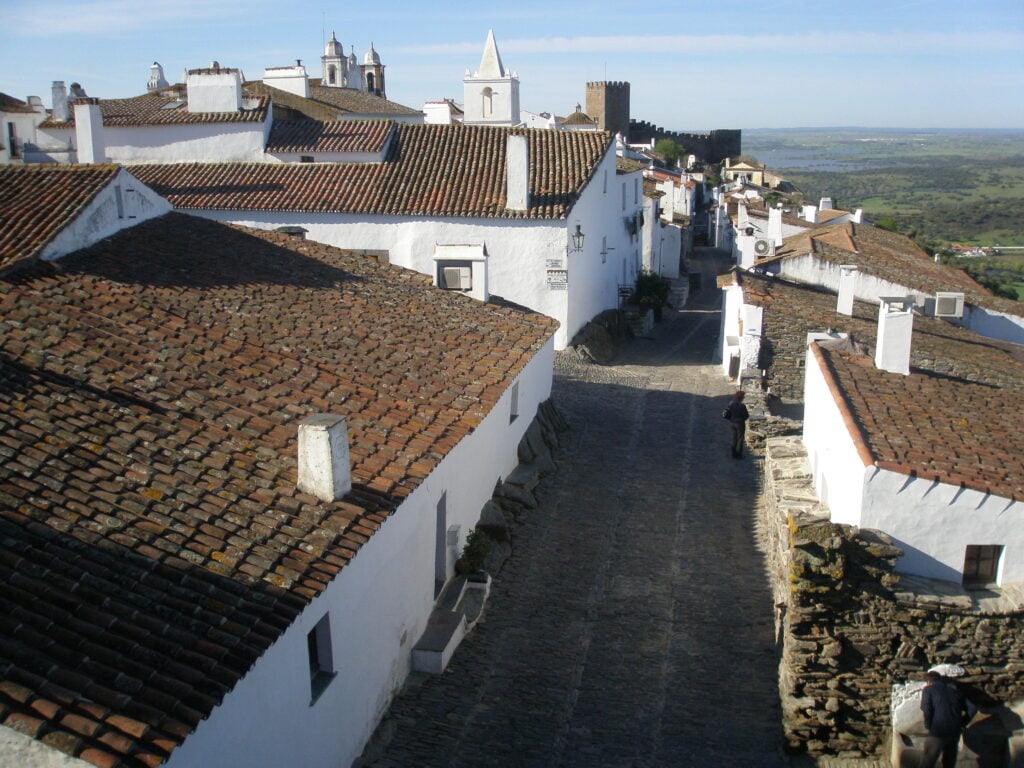
Monsaraz, Photo by Javier Habladorcito (Flickr)
I don’t think you need any directions given that you can see Monsaraz right ahead. Just go up the mountain, it’s not tricky at all.
Monsaraz lies next to the Guadiana on top of a hill that rises out of Alentejo’s never-ending plains. It was conquered from the Moors in 1167 by Geraldo Sem-Pavor and handed over to the Templars by King Sancho II for defense and settlement.
For centuries, the castle of Monsaraz played the role of a lookout point on the Guadiana, from where the border with Castile could be seen. It was the seat of the municipality until 1838 when this function passed to Reguengos.
The medieval town of Monsaraz, protected by its walls, is a small village with its schist streets and whitewashed walls. Its narrow streets are full of nooks and crannies and its backdrop is a breathtaking view of the Alentejo landscape and the Alqueva Lake.
Last Thoughts
And with several hotels and restaurants, and a castle you can visit for free, this is the perfect place to conclude our journey through the Alqueva Lake, watching the sunset with a glass of wine and a table full of bread, cheese, cold meats, and olives.
I really hope I was able to convince you to give this region a chance. As a local, I think there is a lot it can offer, and given that it’s fairly out of hand, it’s never too crowded, making it the perfect place for a pleasant and peaceful 2 or 3-day weekend.
As for the best time to come, the Alentejo is great year-round. In winter, it’s not too cold and not too rainy either. And by the end of December, you usually get very sunny days. Spring is usually a fan favorite, but March and April are quite unpredictable when it comes to the weather. May and June, while the temperature is getting warmer are great months to visit. July through September are great too, especially since there are many artificial beaches scattered around the region, so you get to escape the scorching heat.
But, whenever you decide to visit, I hope you have a great time!
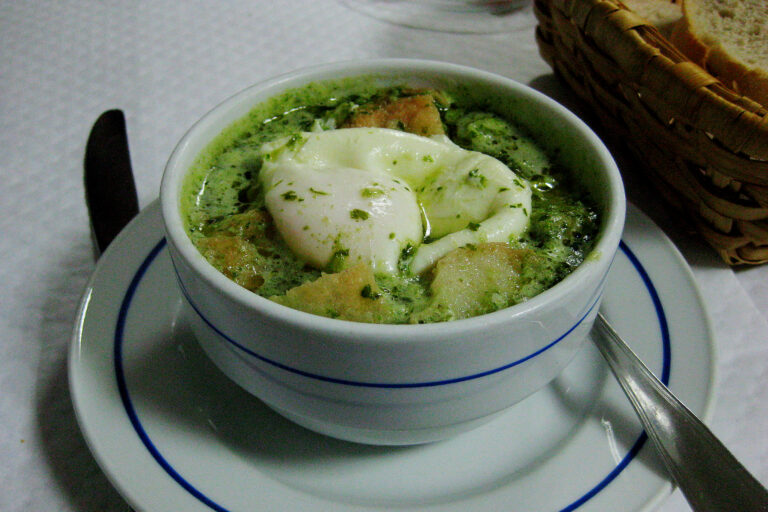
Bread, water, garlic, olive oil, coriander and egg. That’s it. No, I’m not kidding, that’s how you make one of Portugal’s most beloved dishes. And it might come as a shock to you, but the bread doesn’t even need to be fresh or come from a specific region.
In this recipe, you’ll learn how to prepare an açorda in its purest form, but keep in mind that, much like migas, it is a very versatile dish that you can add all kinds of stuff to. Some people on the coast came up with the sea açorda, with either codfish or shrimp.
Others, particularly in the South, usually throw some pork ribs in it. Some people keep the bread slices whole, others prefer mashing it up. So, once you’re down with the basics, feel free to tweak it as you please.
BACK THEN
It seems unquestionable that “açorda” is a gift from the presence of the Arabs on Portuguese soil. It also seems that the açorda is a subsistence dish, probably as a result of food crises. And its arrival is due to its ease of preparation and, above all, the simple mix of basic products. Bread has always been, and still is, a staple of the Portuguese diet.
Analyzing the sources, the recipes, of the Arab presence on the peninsula, we find many soups to which crumbled or coarsely chopped bread was added. This seems to be the origin of the açorda. However, it is almost only in the south of the country that the name “açorda” is used. This term is never associated with the bread soups that are still made today in Beiras or Trás-os-Montes, so it’s safe to assume that the açorda prepared in the Alentejo is most likely the original one.
PORTIONS
3-4
INGREDIENTS
• 400g of wheat bread
• 300ml of water
• 4 cloves of garlic
• 6 teaspoons of olive oil
• 2 teaspoons of salt
• 2 or 3 sprigs of coriander
• 4 egg yolks
INSTRUCTIONS
Start by sautéing with olive oil and chopped garlic. You can also crush the garlic with the salt in a mortar.
Boil the water in a separate pan and hard-boil the eggs.
Add the sliced bread to the sauté. Stir it lightly so the bread absorbs the olive oil and then add half of the coriander you are going to use. Stir well and add to the sauté.
Gradually add the hot water. The açorda should be neither too liquid nor too hard. Once the bread reaches the desired consistency, don’t add any more water.
Add the boiled eggs and serve immediately. With this technique, you can make any açorda you like.
If you’d like to try a porridge-like açorda, all you need to do is stir the bread more often until it crumbles.
There you go, all done! One of the great things about the açorda, and most Portuguese dishes at large, is how often garlic and herbs are used. Garlic is known for being an almost miraculous product, boosting immunity and warding off coughs and colds.
For that reason, the açorda can also be seen (and consumed) as a Portuguese version of chicken soup. It’s great for when you’re ill or feeling weak, and I swear to God it tastes even better if you eat it in front of the fireplace, so make sure to try it this winter!
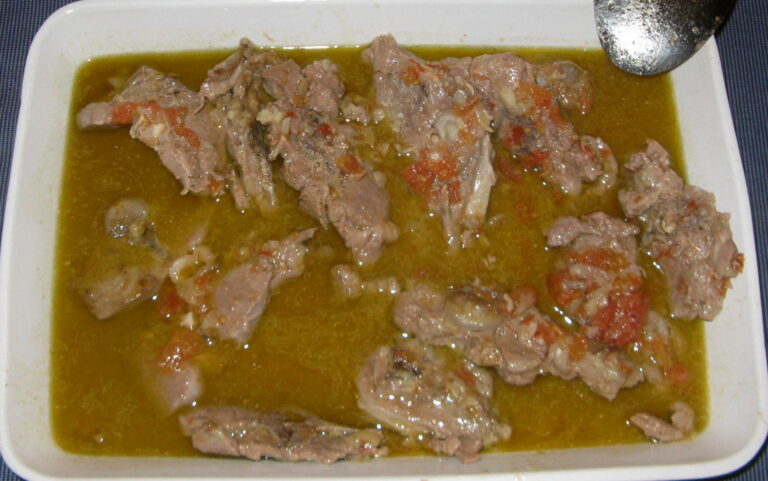
Lamb meat, which is very tender and succulent, is one of the most produced meats in Alentejo. The stew is the most popular dish made with this specific meat, not only because of the way it is cooked but also because of how it is presented.
This particular recipe is from a municipality in Évora District called Reguengos de Monsaraz. It is a true gem of Portuguese traditional cuisine. The popularity of lamb meat is showcased, to a large extent, by the municipality’s gastronomic week, which is dedicated specifically to the cooking and tasting of lamb dishes. This stew is one of that week’s most well-known, sought-after culinary delights.
Portuguese Lamb Stew Recipe
Ingredients (8 people)
2 kg (4.4 pounds) of lamb meat
500 grams (1.1 pounds) of onion
2 tablespoons of flour
200 grams (0.44 pounds) of lard
5 garlic cloves
1 bay leaf
1 tablespoon of peppercorns
1 dessertspoon of sweet paprika
1 small chili pepper
1 kg (2.2 pounds) of homemade bread
Salt
Instructions
Start by cutting the lamb meat into pieces, and dip them in flour.
Then, take 3 spoons out of the 200 grams of lard, and place the remaining inside a clay pot.
Heat the clay pot with the lard inside it for a bit, place the meat on it, and let it fry for another bit until it is brown.
On the side, in another clay pot, put the other 3 spoons of lard and braise the chopped onions, the sliced garlic cloves, and the peppercorns. Cook until the onions are soft and transparent.
Then, add the already browned meat to the second clay pot, the remaining seasonings (bay leaf, sweet paprika, chili pepper, and salt), and enough water to make the stew (start with a bit of water, and you can add more later on, if you think it is necessary).
Cover the pot and let it cook for one hour and a half, more or less, at medium/low heat.
When it is done, taste it and rectify the seasoning if needed.
When serving, slice the bread and pour the broth on top. The meat will be served on the side, in another recipient, but at the same time as the bread with the broth.
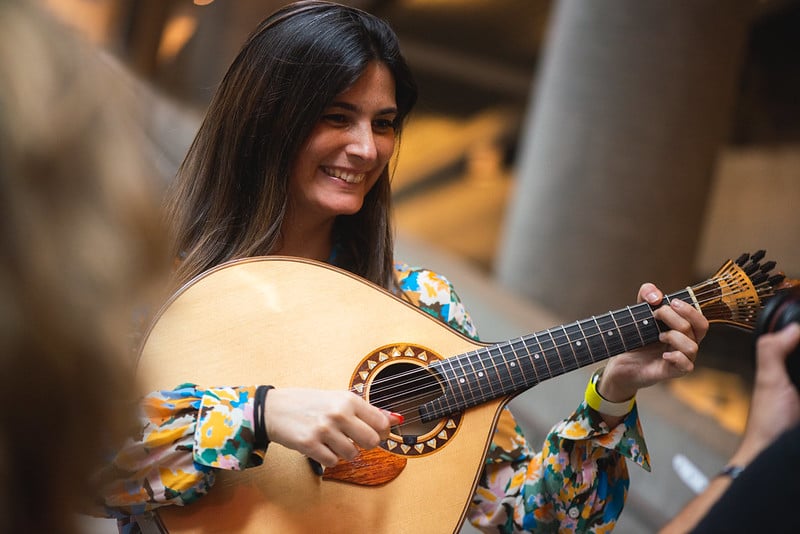
Marta Pereira da Costa was born in Lisbon in 1982 and started her musical training with the piano at the age of 4 and studied classical guitar at 8. At 18, she began learning the Portuguese fado guitar under Carlos Gonçalves, Amália Rodrigues’ guitarist. Although she graduated in Civil Engineering and worked in the field for eight years, she left her profession in 2012 to dedicate herself entirely to music.
Photo by MIMO Festival, Flickr
She is recognized as the first woman to professionally play the Portuguese Guitar in fado, blending it with jazz, world, and Portuguese music. This innovation led to her receiving the “Instrumentalist Award” from the Amália Rodrigues Foundation in 2014. In 2016, Marta released her debut album with Warner Music Portugal, featuring contributions from global and Portuguese musicians like Richard Bona, Dulce Pontes, Camané, and Rui Veloso.
Her international performances have taken her across Brazil, the USA, Canada, and Europe, with appearances at venues like Teatro Tivoli, NOS Alive, MIMO Festival, and Lincoln Center.
Marta’s stage presence is captivating, marked by a blend of sensitivity, intensity, and dynamism. Her performances, whether in intimate settings or large outdoor events, are unique and reflect her deep connection with the Portuguese guitar.
New York Music Daily reflected, “In the world of fado, she’s a rarity, as a woman instrumentalist, composer and bandleader.”
Performances and Album
Marta frequently visited Lisbon’s Clube de Fado, learning from masters like Mário Pacheco and Fontes Rocha. She accompanied notable singers such as Cuca Roseta and Rodrigo Costa Félix. Marta also performed with famous artists like Mariza and Carlos do Carmo. She joined Mário Pacheco’s group, contributing to concerts worldwide, especially after their 2005 album, recognized by Songlines magazine.
Pereira da Costa participated in Jaime Roldán’s CD on the track “Pasa.” In 2008, she was a soloist in “Mãe” from her husband Rodrigo Costa Félix’s album. She recorded on Rodrigo’s second CD, “Fados de Amor,” marking the first time in Fado history that a Portuguese Guitar was exclusively played by a woman. Her eponymous solo album debuted in 2016.
Performing Fado on the International Stage
National Public Radio (NPR)’s YouTube channel, which started in 2008 and now has over 8.5 million YouTube subscribers, recently showcased Pereira da Costa on its Tiny Desk Concert series. The Tiny Desk Studio is actually the desk of NPR Music’s All Songs Considered host Bob Boilen, which is located in Washington, D.C., USA, and has featured the likes of Coldplay, Ed Sheeran, Taylor Swift, and Jacob Collier.
Marta Pereira da Costa’s fingerpicking prowess delights in her Tiny Desk appearance, appearing alongside second guitarist João José Pita Junior and percussionist Pedro Segundo. Her entire performance is a musical journey through Portugal, from land to sea and everything in between. She plays four songs during a nearly 21-minute performance starting with “Terra” all the way through “Dia de Feira.”
You can enjoy her performance below.
Marta Pereira da Costa’s journey is a testament to innovation in traditional music forms. She has redefined the role of the Portuguese Guitar, creating a new path for the instrument and inspiring future generations of musicians.
To see Pereira da Costa’s upcoming schedule, please check her schedule here and get more information on Facebook.
Fado Tours in Lisbon
If you would like to catch fado in Lisbon, Pereira da Costa’s hometown, there are a number of options to try.
Fado in Chiado offers a daily live traditional fado show. It features a guitar, viola, and two singers. The show lasts under an hour in Chiado, immersing guests in fado’s melancholic vibes. Skip-the-line tickets are available, with drinks extra.
Explore Alfama’s fado roots with a guided tour, including Mouraria. The tour involves a traditional fado house visit and a typical dinner in Alfama. The tour includes a fado show entry and a drink.
For romance, try a sunset walking tour in Lisbon, ending with a fado show and dinner. Learn about Alfama’s heritage and enjoy ginjinha liquor. Post-sunset, savor a 3-course meal with fado entertainment.
For a unique experience, join a 4-hour walking tour with a fado singer. The tour covers historical streets, public squares, and taverns. Enjoy live fado performances and Portuguese snacks like chourico and caldo verde.
Subscribe to our newsletter below to get the latest news, reviews, info and more!
We use cookies to ensure that we give you the best experience on our website. If you continue to use this site we will assume that you are happy with it.